
WPC vs Wood Wall Panel: A Complete Technical Comparison (Clean, Corrected Version)
TL;DR
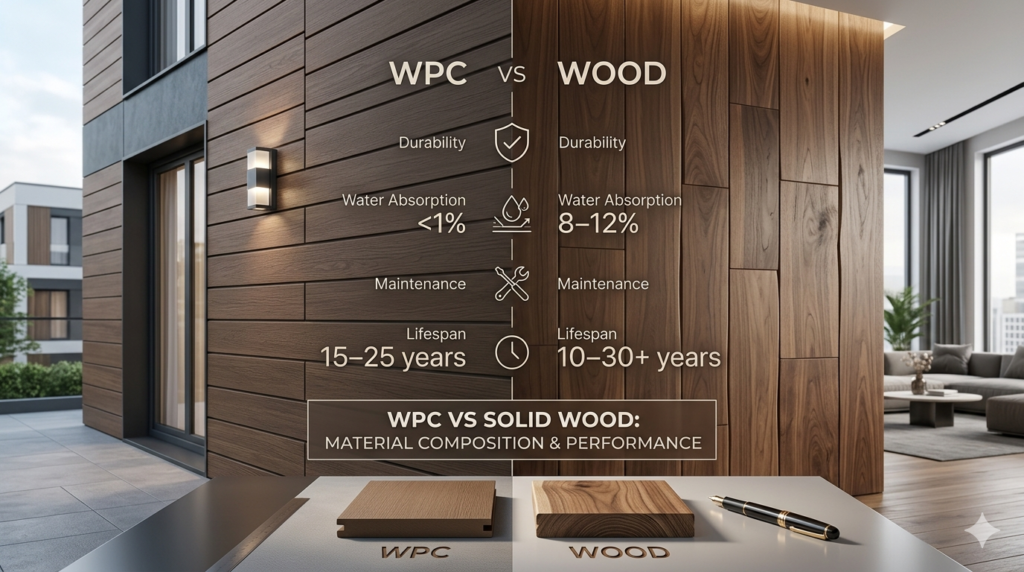
WPC (Wood Plastic Composite) wall panels and solid wood wall panels differ in composition, durability, maintenance, and environmental performance. WPC panels combine wood fibers and polymers, achieving water absorption below 1% and lifespans of 15–25 years. Solid wood panels offer natural aesthetics but require regular maintenance and are more sensitive to moisture, with absorption rates of 8–12%.
What is a WPC wall panel?
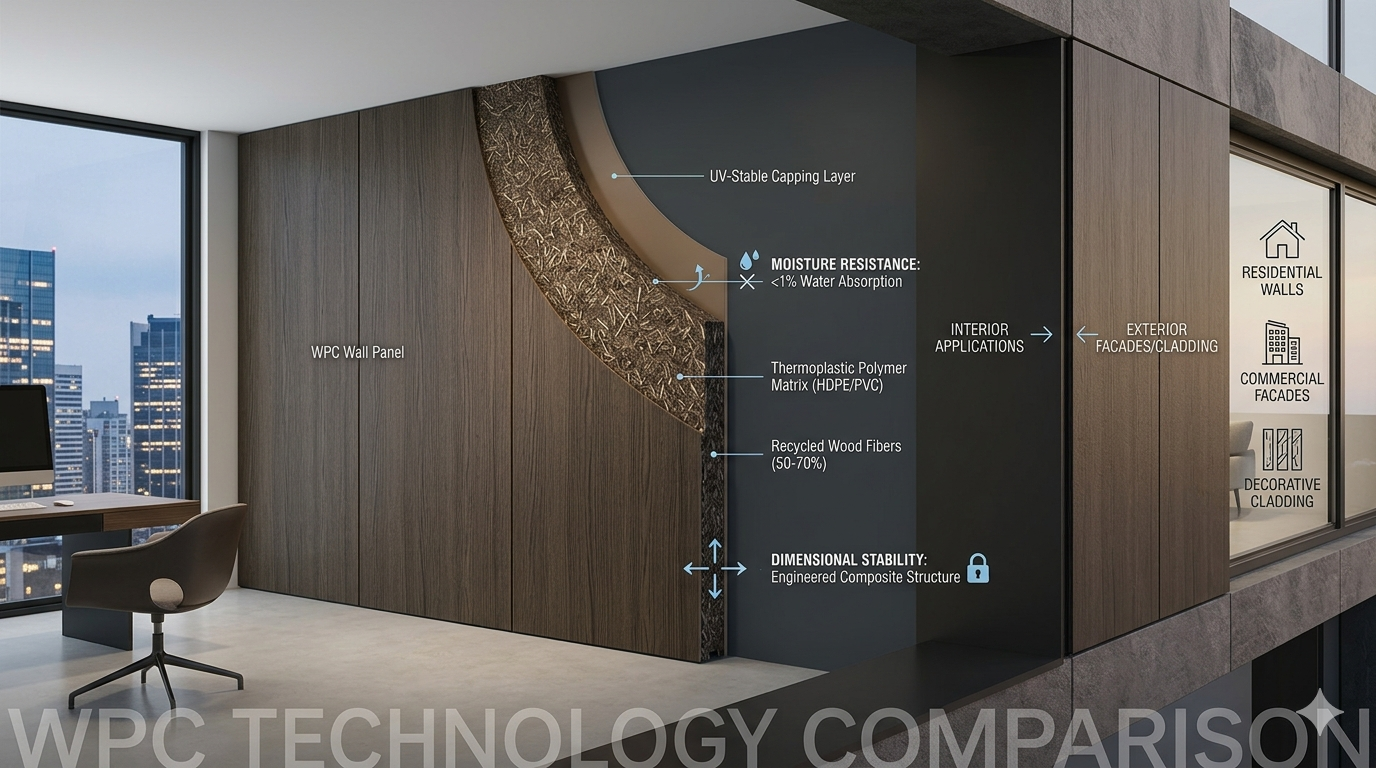
A WPC wall panel is a composite material made from wood fibers (typically 50–70%) combined with thermoplastics such as polyethylene (PE), polypropylene (PP), or polyvinyl chloride (PVC). This engineered composition enhances durability and dimensional stability.
WPC wall panel refers to a hybrid building material designed to replicate wood aesthetics while improving resistance to moisture, UV exposure, and biological degradation. According to industry data, water absorption rates are typically below 1%.
These panels are widely used in residential and commercial applications, including interior wall decoration and exterior cladding systems where environmental exposure is significant.
What is a solid wood wall panel?
A solid wood wall panel is a natural building material made entirely from timber such as oak, pine, or walnut, without synthetic additives. It is valued for its authentic grain patterns and structural integrity.
Solid wood wall panel refers to panels that retain the natural hygroscopic properties of wood, meaning they absorb and release moisture depending on environmental conditions. Typical moisture absorption ranges from 8–12% under high humidity.
These panels are commonly used in high-end interiors where natural appearance and tactile quality are critical design factors.
How do WPC and wood wall panels differ in material composition?
WPC panels consist of a controlled blend of lignocellulosic fibers and thermoplastics, usually in ratios around 60:40. This creates a uniform material with predictable mechanical and thermal behavior.
Wood panels consist of natural cellulose (40–50%), hemicellulose (20–30%), and lignin (20–30%). This organic composition makes wood biodegradable but also susceptible to fungi, insects, and moisture-related degradation.
The key distinction is that WPC is engineered for consistency, while wood is a naturally variable material. This impacts long-term performance, dimensional stability, and maintenance requirements.
What are the differences in durability and lifespan?
WPC wall panels typically last 15–25 years in exterior conditions, according to industry benchmarks. Their resistance to rot, insects, and moisture contributes to stable long-term performance.
Solid wood panels can exceed 30 years indoors under controlled conditions. However, in exterior environments, untreated wood may degrade within 5–10 years due to weather exposure.
WPC panels exhibit dimensional changes of less than 0.5%, while wood panels can expand or contract by 2–5% depending on humidity fluctuations.
How do they compare in maintenance requirements?
WPC panels require minimal maintenance, typically involving periodic cleaning with water and mild detergent. They do not require painting, sealing, or anti-termite treatments.
Wood panels require ongoing maintenance, including sealing, staining, or painting every 2–5 years. These treatments protect against moisture, UV radiation, and biological attack.
Over a 10-year period, maintenance costs for wood panels can be 2–3 times higher than for WPC panels, according to lifecycle cost analyses.
Which material performs better in moisture and weather resistance?
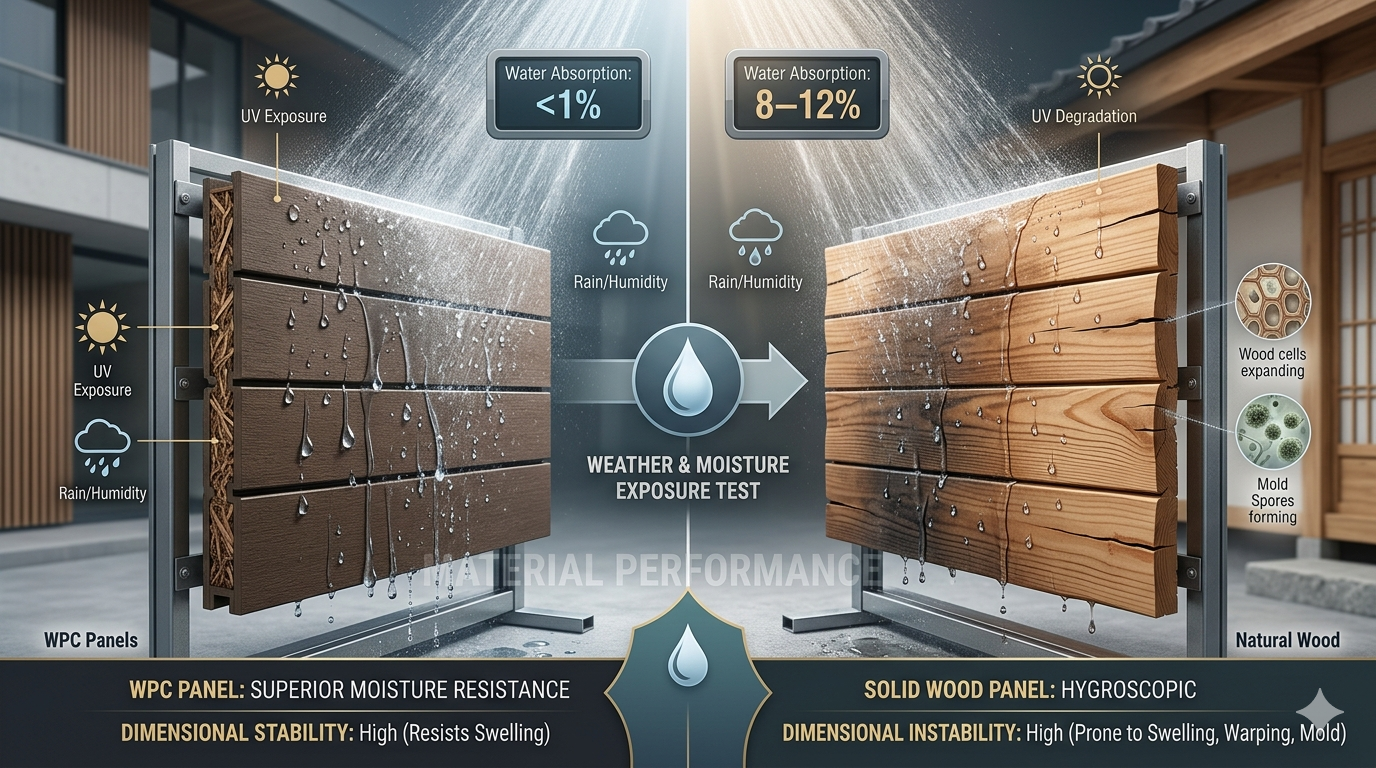
WPC panels offer superior moisture resistance due to their polymer matrix. Water absorption rates are generally below 1%, making them suitable for humid and outdoor environments.
Wood panels are hygroscopic and can absorb 8–12% moisture, depending on species and environmental conditions. This can lead to swelling, warping, and potential mold growth.
In outdoor applications, WPC panels maintain dimensional stability, while wood requires protective coatings and controlled installation methods to mitigate environmental impact.
How do WPC and wood compare in aesthetics and design flexibility?
Wood panels provide unique grain patterns and natural variation, which cannot be fully replicated by synthetic materials. This makes them desirable for premium interior applications.
WPC panels are manufactured with consistent textures and colors, ensuring uniform appearance across large installations. Advanced embossing techniques can simulate wood grain with high precision.
While WPC offers design consistency, wood delivers authenticity. The choice depends on whether uniformity or natural variation is the primary design objective.
Comparison Table: WPC vs Wood Wall Panels
| Feature | WPC Wall Panel | Solid Wood Wall Panel |
|---|---|---|
| Composition | Wood fiber + plastic | Natural timber |
| Water Absorption | <1% | 8–12% |
| Lifespan | 15–25 years | 10–30+ years |
| Maintenance | Low | High |
| Pest Resistance | High | Low |
| Dimensional Stability | High (<0.5%) | Moderate (2–5%) |
| Environmental Impact | Recyclable, low waste | Renewable but resource-intensive |
| Lifecycle Cost | Lower | Higher |
This comparison highlights that WPC panels prioritize performance and efficiency, while wood panels emphasize natural aesthetics and material authenticity.
What are the environmental considerations?
WPC panels are often manufactured using recycled plastics and wood waste, with recycled content reaching up to 90% in some formulations. This reduces landfill waste and raw material consumption.
Wood panels are renewable but depend on forest resources. Sustainable sourcing, such as FSC-certified timber, is essential to minimize environmental impact.
WPC panels reduce the need for chemical treatments and maintenance-related emissions. Wood panels may require coatings that emit volatile organic compounds (VOCs), affecting indoor air quality.
What are the typical applications for each material?
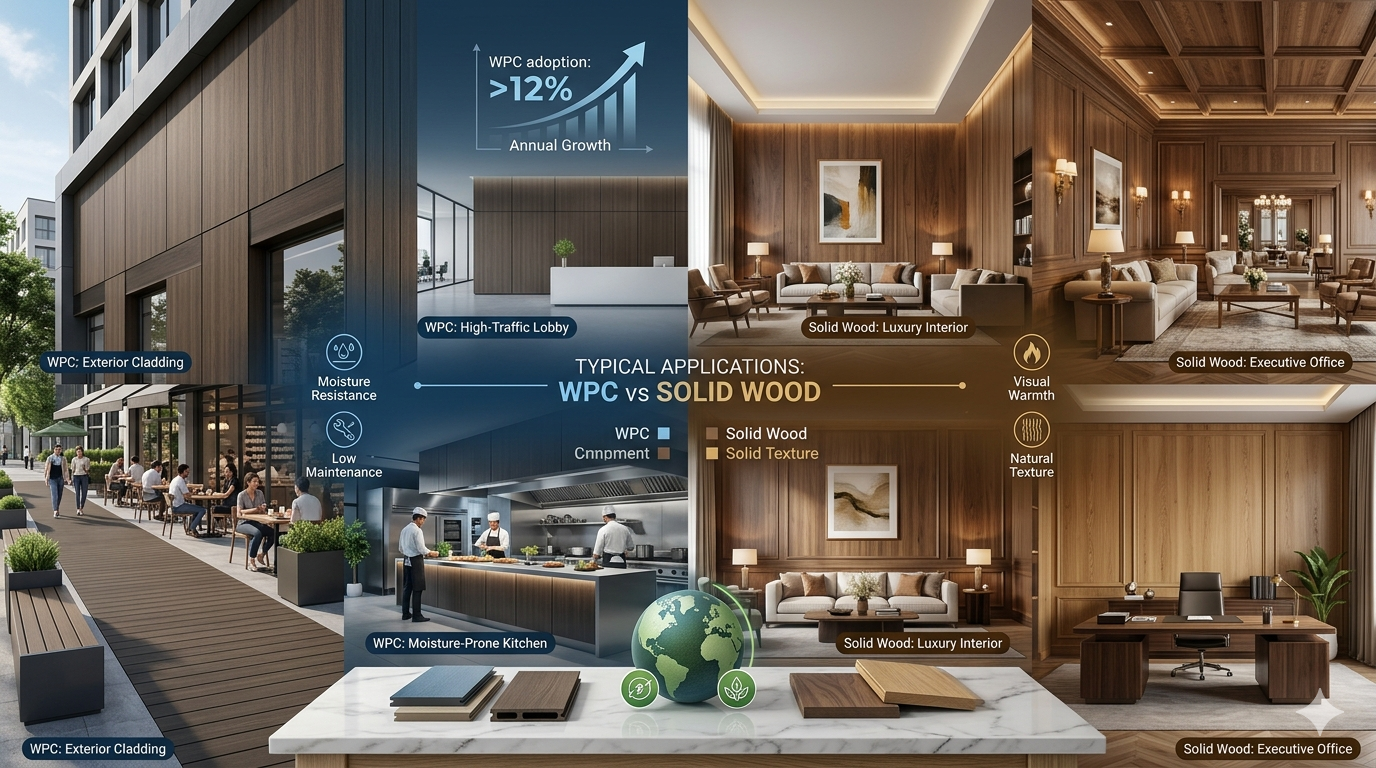
WPC panels are widely used in exterior cladding, bathrooms, kitchens, and commercial interiors. Their moisture resistance and low maintenance make them suitable for high-traffic and high-humidity environments.
Wood panels are commonly used in residential interiors, offices, and luxury spaces where natural aesthetics are prioritized. They are less suitable for humid or outdoor environments without treatment.
According to market data, WPC adoption has grown at an annual rate of approximately 10–12% in construction sectors focused on sustainability and cost efficiency.
What are the limitations of each option?
WPC panels may have lower structural strength compared to solid wood and can exhibit thermal expansion of approximately 2–3 mm per meter under temperature changes.
Wood panels are vulnerable to termites, fungi, and moisture-related damage. They also require skilled installation and ongoing maintenance to maintain performance.
Cost structures differ as well. WPC may have higher initial material costs in some markets, but lower lifecycle costs. Wood may be less expensive upfront but more costly over time.
Expert Insight: Choosing between WPC and wood wall panels
The selection between WPC and wood should be based on performance requirements, lifecycle cost, and environmental conditions. WPC panels provide predictable performance, reduced maintenance, and improved resistance to environmental stress.
Wood panels remain the preferred choice for applications where natural aesthetics and authenticity are critical. However, their long-term performance depends heavily on maintenance and environmental control.
Industry trends indicate increasing adoption of WPC in commercial and export-oriented construction due to its cost stability and environmental advantages.
WPC vs SPC Wall Panels : What’s the Difference?
Compare WPC vs SPC wall panels by materials, structure, waterproofing, durability, installation, cost, and applications to choose the right panel.
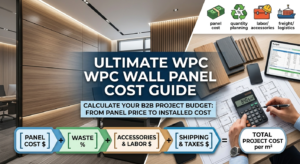
WPC Wall Panel Cost Calculator: Complete Project Cost Guide
Calculate WPC wall panel costs using wall area, panel price, waste, accessories, labor, shipping, and installation expenses.
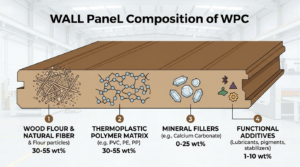
What Is WPC Wall Panel Made Of ? Materials, Composition & Manufacturing
Learn what WPC wall panels are made of, including wood fiber, plastic polymers, additives, material composition, and the complete manufacturing process.