
TL;DR
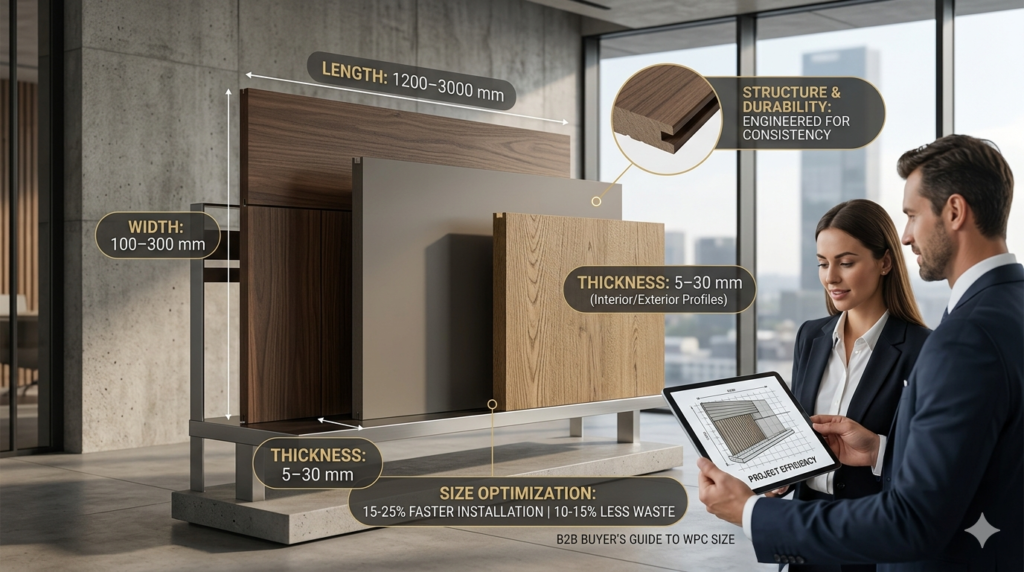
WPC wall panel size typically ranges from 1200–3000 mm in length, 100–300 mm in width, and 5–30 mm in thickness, depending on application. Interior panels are thinner (5–10 mm), while exterior cladding requires thicker profiles (15–30 mm). According to industry data, selecting the correct size can reduce installation time by 15–25% and material waste by 10–15%, making size optimization a critical factor for B2B buyers.
What is WPC Wall Panel Size and Why Does It Matter?
WPC wall panel size refers to the standardized dimensions—length, width, and thickness—of wood-plastic composite panels used for wall cladding and decorative applications. WPC is a composite material made from wood fibers and thermoplastics, engineered to provide dimensional stability and moisture resistance.
WPC wall panel size is a key parameter influencing installation efficiency, material utilization, and structural performance. According to industry data, improper size selection can increase installation complexity by 20–30% and result in significant cutting waste. For large-scale projects, dimension standardization directly impacts labor cost, project timelines, and overall execution efficiency.
What Are the Standard WPC Wall Panel Sizes?
Standard WPC wall panel sizes are designed to match common building dimensions and logistics constraints. Typical specifications include:
- Length: 1200 mm – 3000 mm
- Width: 100 mm – 300 mm
- Thickness: 5 mm – 30 mm
Among these, 2400 × 160 × 8 mm is one of the most widely used formats for interior applications because it aligns with standard ceiling heights of 2.4 meters. According to manufacturing data, this size reduces cutting requirements by up to 20%, improving installation efficiency and minimizing waste in residential and commercial projects.
How Do Length, Width, and Thickness Affect Performance?
Length: Installation Speed vs Flexibility
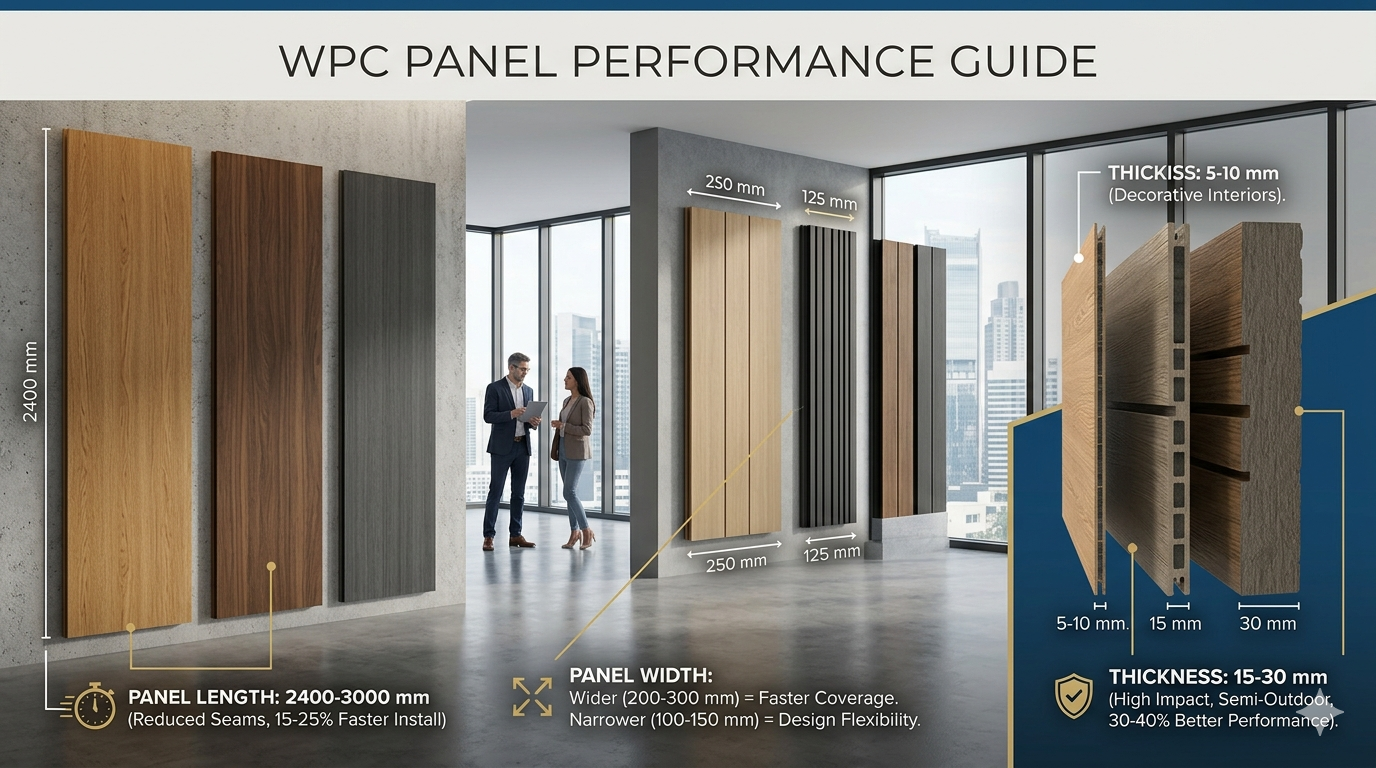
Panel length determines joint frequency and visual continuity. Longer panels (2400–3000 mm) reduce seams, improving aesthetics and lowering installation time by 15–25%. However, they require more careful handling and may increase transportation costs by 5–10% due to packaging constraints.
Width: Coverage Efficiency vs Design Flexibility
Panel width impacts coverage speed and design style. Wider panels (200–300 mm) can reduce installation time by up to 20%, making them ideal for large commercial surfaces. Narrow panels (100–150 mm) allow more design variation, commonly used in feature walls and decorative interiors.
Thickness: Strength and Application Scope
Thickness defines durability and load resistance. Thin panels (5–10 mm) are suitable for decorative interiors, while thicker panels (15–30 mm) provide higher impact resistance, improving performance by 30–40% in high-traffic or semi-outdoor environments.
Comparison Table: WPC vs PVC Panel Sizes and Performance
| Feature | WPC Wall Panels | PVC Wall Panels |
|---|---|---|
| Length Range | 1200–3000 mm | 2400–6000 mm |
| Width Range | 100–300 mm | 200–400 mm |
| Thickness | 5–30 mm | 5–10 mm |
| Structural Strength | High | Medium |
| Water Resistance | <1% absorption | Near 0% |
| Application Scope | Interior & exterior | Mainly interior |
WPC panels provide greater thickness and structural versatility compared to PVC. PVC panels are lighter and easier to install but lack the mechanical strength required for demanding applications such as commercial wall systems or semi-outdoor environments.
WPC vs Wood: How Do Panel Sizes and Stability Compare?
WPC wall panels are manufactured with consistent dimensions, typically maintaining tolerances within ±1 mm, which simplifies installation and reduces alignment errors. This level of precision is critical for large-scale commercial projects where uniformity affects both aesthetics and labor efficiency.
Wood panels, by contrast, vary depending on species and processing methods. Industry studies show dimensional variation in natural wood can reach ±3–5%, especially under humidity changes. This variability increases installation time and may lead to gaps, warping, or misalignment over time, particularly in environments with fluctuating moisture levels.
Where Are Different WPC Wall Panel Sizes Used?
Residential Applications (Bathrooms, Kitchens, Living Spaces)
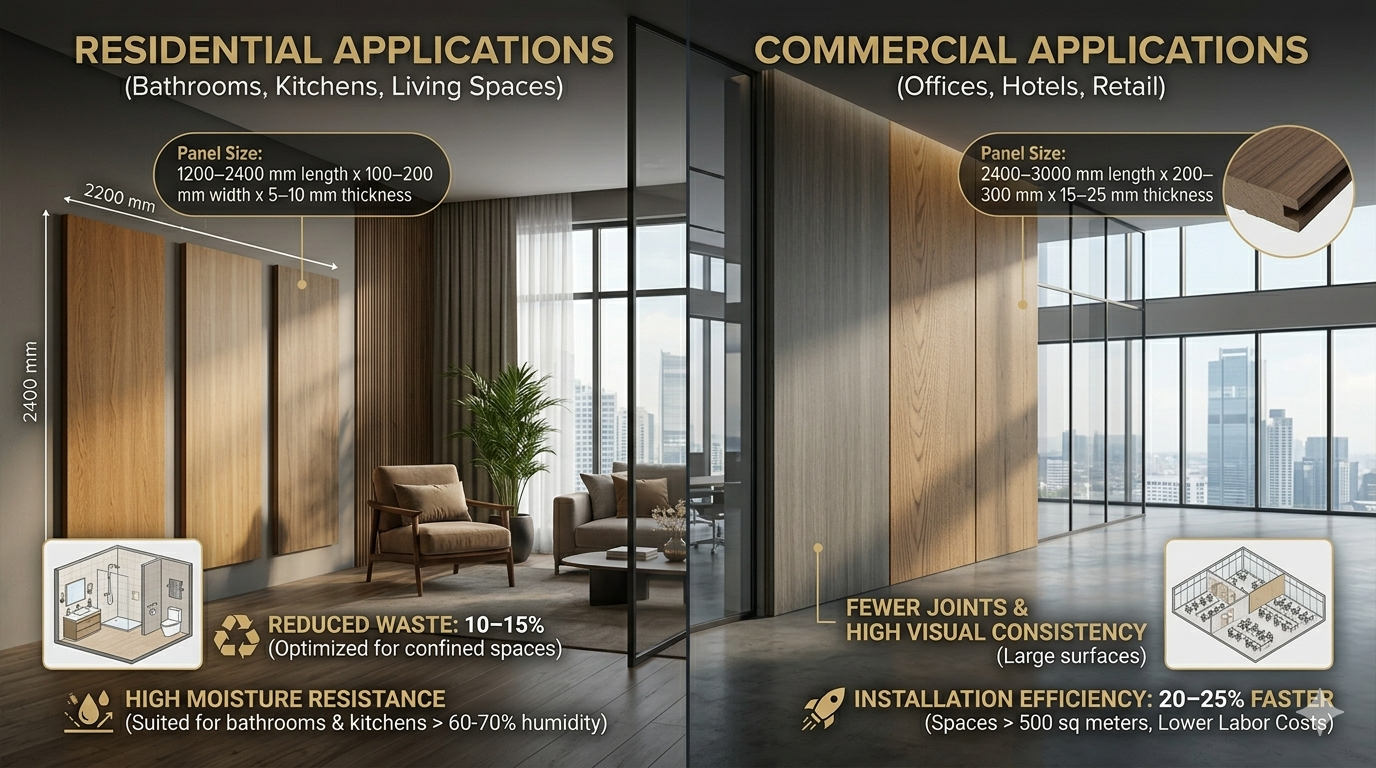
In residential settings, smaller and medium-sized panels (1200–2400 mm length, 100–200 mm width, 5–10 mm thickness) are commonly used. These dimensions allow easier handling in confined spaces and reduce cutting waste by 10–15%. Moisture resistance makes them particularly suitable for bathrooms and kitchens where humidity often exceeds 60–70%.
Commercial Applications (Offices, Hotels, Retail)
Commercial projects typically use larger panels (2400–3000 mm length, 200–300 mm width, 15–25 mm thickness). These sizes reduce joint lines and improve visual consistency across large wall surfaces. According to project data, larger panels can reduce installation time by 20–25% in spaces exceeding 500 square meters, significantly lowering labor costs.
How Do WPC Panel Sizes Affect Cost and Efficiency?
Panel size directly influences both material efficiency and labor cost. Larger panels reduce installation time but may increase waste if not aligned with wall dimensions. Smaller panels offer flexibility but increase labor intensity due to more joints and alignment work.
According to industry estimates, optimizing WPC wall panel size can reduce total project costs by 8–15%. Efficient size selection minimizes offcuts, improves installation speed, and ensures better resource utilization, especially in standardized construction environments.
What Are the Limitations of WPC Wall Panel Sizes?
WPC wall panel sizes are constrained by transportation, handling, and application requirements. Panels longer than 3000 mm often require special packaging and logistics, increasing shipping costs by 10–20%. Additionally, excessive thickness (above 30 mm) may add weight without proportional performance benefits in interior applications.
Another limitation is installation adaptability. In irregular spaces, larger panels may require significant cutting, reducing efficiency. Therefore, size selection must balance logistics, application needs, and installation conditions rather than relying solely on maximum dimensions.
Expert Insight: How Should B2B Buyers Choose the Right Size?
From a B2B perspective, WPC wall panel size selection should be based on project scale, environmental conditions, and lifecycle cost analysis. Standard sizes such as 2400 mm length are preferred because they align with global construction norms, reducing customization requirements and lead times.
Industry analysis indicates that projects using standardized panel systems experience up to 20% fewer delays and improved installation consistency. Buyers should prioritize size compatibility with building dimensions, as well as supplier capability for bulk production and consistent tolerances.

WPC Wall Panel Factory China : Complete Buyer Guide
Learn how to choose a reliable WPC wall panel factory in China. Explore costs, manufacturing, certifications, and sourcing tips for global buyers.

WPC Wall Panel Manufacturer : How to Choose the Right Supplier
Discover how to choose a reliable WPC wall panel manufacturer. Learn key factors like quality, certifications, pricing, and supplier evaluation.
WPC vs MDF Wall Panels : Complete Comparison Guide
Compare WPC vs MDF wall panels in durability, cost, moisture resistance, and performance to choose the best material.