
1. What Is the Wholesale Price of WPC Wall Panels?
WPC wall panel wholesale prices vary according to material composition, panel dimensions, thickness, surface finish, order quantity, and shipping terms. There is no single price that applies to every product or market.
For preliminary budgeting, buyers may use the following illustrative material-price ranges, which are not verified live quotations:
| Product Category | Indicative Budget Range |
|---|---|
| Basic decorative WPC panels | US$5–10/m² |
| Mid-range interior WPC panels | US$8–15/m² |
| Specialized or premium-finish panels | US$15–25+/m² |
These ranges are intended for initial planning only. Actual quotations may fall outside them depending on product specifications, factory capabilities, order volume, and market conditions. Buyers should confirm whether prices are quoted per square meter, linear meter, panel, or package.
For accurate comparison, request a quotation based on the same product specification and delivery terms from each supplier.
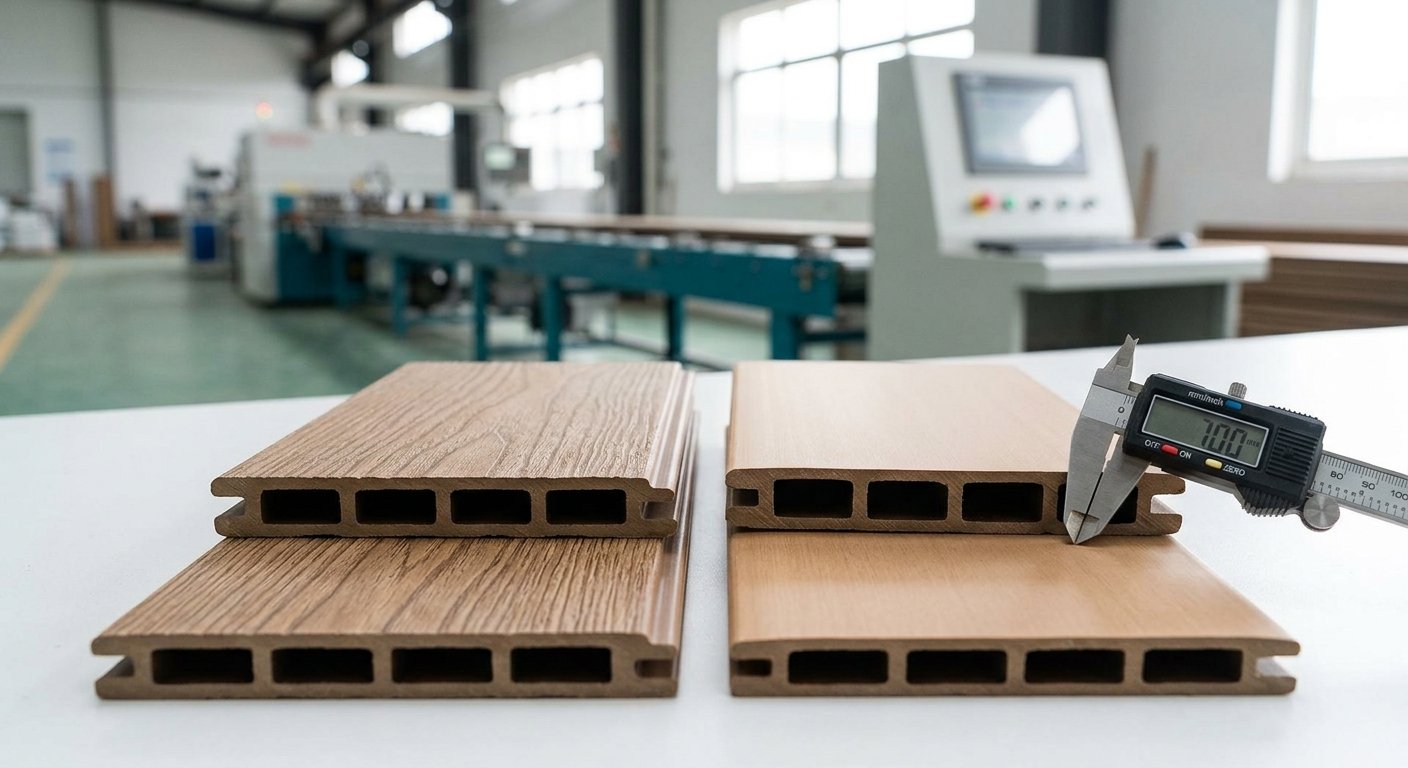
2. What Determines WPC Wall Panel Wholesale Prices?
Several factors influence the factory price.
Raw materials: Polymer type, wood-based filler, mineral additives, and formulation affect production costs and product characteristics.
Panel dimensions: Width, length, and thickness determine material consumption and can affect manufacturing efficiency.
Surface finish: Embossing, decorative film, printing, and co-extrusion may increase production costs.
Color and customization: Standard colors are often easier to source than customized colors or private-label designs.
Order quantity: Larger orders may reduce unit costs when production, packaging, and setup expenses are spread across more panels.
Packaging: Export cartons, protective materials, pallets, and branded packaging can affect the quoted price.
Quality requirements: Special tolerances, testing, documentation, and inspection requirements may add costs.
A useful principle for B2B procurement is to compare price, specification, and expected performance together, rather than choosing the supplier with the lowest advertised price.
3. How Order Quantity Affects Wholesale Pricing
Manufacturers may offer different prices for different order volumes, but discounts are not automatic. The actual price depends on production capacity, raw-material costs, product complexity, and whether the order uses standard or customized specifications.
Consider this illustrative quotation structure for the same panel specification:
| Order Quantity | Example Price |
|---|---|
| 500 m² | US$9.00/m² |
| 1,000 m² | US$8.50/m² |
| 3,000 m² | US$8.00/m² |
These figures demonstrate how a volume-based quotation might be structured; they are not actual market quotations or guaranteed discounts.
At 3,000 m², a US$1/m² difference represents US$3,000 in material cost. However, buyers should also consider inventory risk, storage costs, cash flow, and demand forecasts before placing larger orders.
For distributors, negotiating prices based on repeat orders or annual purchasing volume may be more useful than focusing exclusively on a single shipment.
4. How to Calculate Your Bulk Purchase Cost
The material budget should include the actual purchasing quantity, not only the net wall area.
Required Quantity = Net Wall Area × (1 + Waste Rate)
Panel Cost = Required Quantity × Unit Price
For example, suppose a project requires 1,000 m² of wall coverage, the agreed price is US$8.50/m², and the estimated waste allowance is 8%.
Required quantity:
1,000 × 1.08 = 1,080 m²
Panel cost:
1,080 × US$8.50 = US$9,180
This calculation excludes accessories, labor, shipping, taxes, and other project expenses.
Waste allowances should reflect panel dimensions, wall geometry, cutting requirements, and installation patterns. Confirm the final quantity with the installer or project team before ordering.
5. Factory Price vs. Landed Cost
The factory quotation is only one part of the total import cost. International buyers should distinguish between EXW, FOB, CIF, and DDP quotations.
| Quotation Term | General Cost Consideration |
|---|---|
| EXW | Buyer generally arranges collection and subsequent transportation |
| FOB | Seller handles the agreed export-side obligations up to the named port or delivery point under the applicable Incoterms |
| CIF | Seller arranges cost, insurance, and freight to the named destination port |
| DDP | Seller assumes broader delivery responsibilities, including import clearance and duties where applicable under the agreed terms |
The exact responsibilities depend on the named place and the applicable Incoterms rules.
Use this formula to compare overseas suppliers:
Landed Cost = Product Cost + Packaging + Freight + Insurance + Duties + Customs Fees + Local Delivery
A supplier with a slightly higher FOB price may still offer a competitive landed cost if its packaging, container utilization, and shipping arrangements are more efficient.
6. Additional Costs B2B Buyers Should Budget For
Wholesale buyers should identify all charges before confirming an order.
Typical additional expenses include:
- Export packaging and palletization
- Product samples and sample shipping
- Third-party inspection
- International freight and insurance
- Import duties and customs clearance
- Local transportation and warehouse handling
- Accessories, trims, and installation hardware
- Exchange-rate fluctuations and bank charges
Not every project will incur every item. Ask the supplier to identify what is included in the quotation and what remains the buyer’s responsibility.
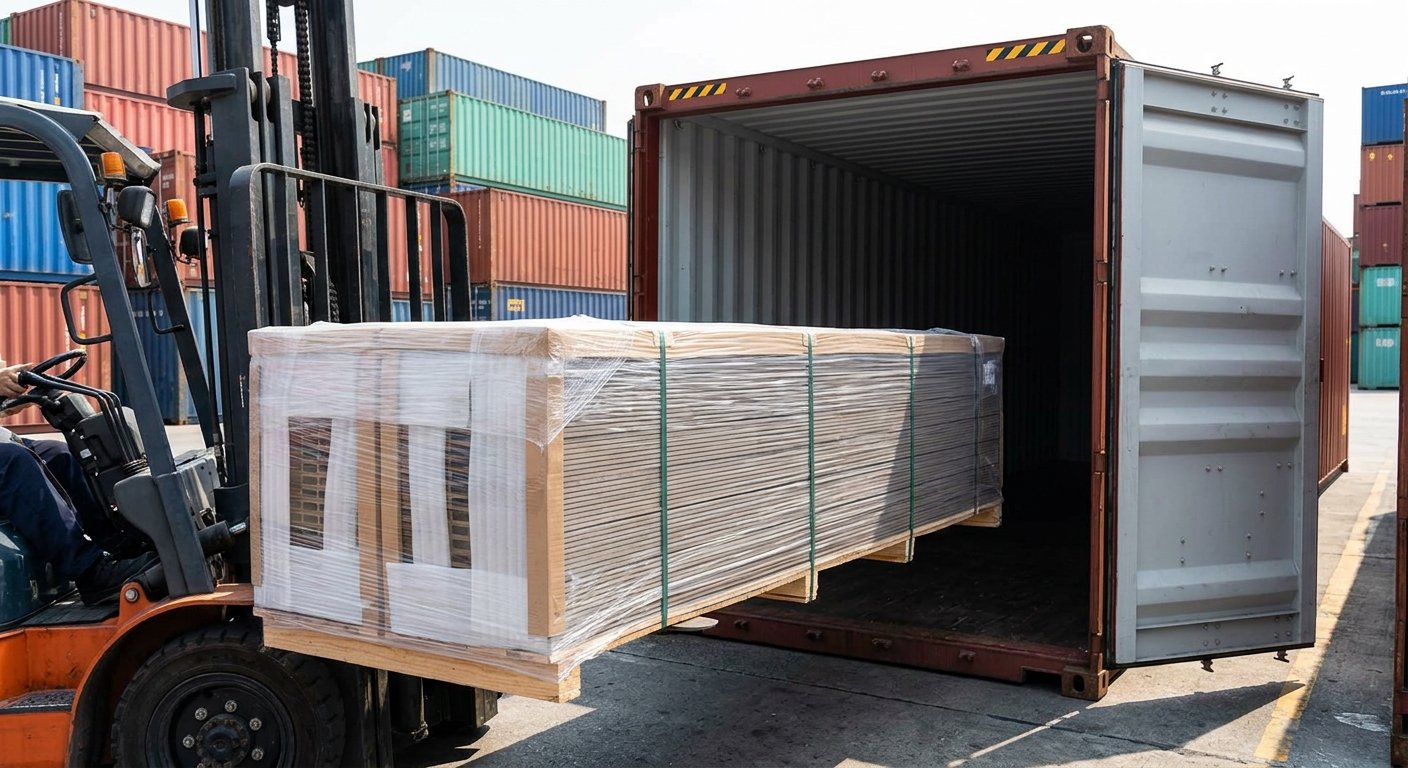
For large orders, container loading information is particularly important. Request the carton dimensions, gross weight, packing quantity, and estimated loading capacity to help calculate freight costs accurately.
7. How to Evaluate a WPC Wall Panel Wholesale Supplier
Price should not be the only selection criterion. A reliable supplier must be able to meet your specifications and delivery schedule consistently.
Before placing a bulk order, request:
- Product specifications and technical datasheets
- Samples of the actual surface finish
- Written confirmation of dimensions and tolerances
- MOQ and production lead time
- Packaging and container-loading details
- Quality inspection procedures
- Warranty and defect-handling terms
- Export documentation and payment terms
Buyers should also verify whether the supplier operates its own production facility or sources from other factories. Both business models can be viable, but production responsibility and quality-control arrangements should be clear.
8. Manufacturer vs. Trading Company: Which Offers Better Value?
Buying directly from a manufacturer may provide access to production planning, technical staff, customization, and volume-based pricing. This can be valuable for importers and distributors who purchase regularly.
Trading companies may offer broader product selection, consolidated shipments, and sourcing assistance across different product categories. Their quotations may include services that are not provided directly by a factory.
The best option depends on the order. When comparing suppliers, evaluate the total quotation, technical compliance, communication, delivery reliability, and after-sales responsibilities.
For repeat bulk purchases, a qualified manufacturer can be a strong long-term partner, provided it has sufficient production capacity and verifiable quality-control processes.
9. How to Get an Accurate Wholesale Quotation
To obtain comparable quotations, prepare a clear request for quotation (RFQ) with:
- Product type and application
- Panel width, length, and thickness
- Color and surface finish
- Required quantity in m² or linear meters
- Accessories and packaging requirements
- Destination port or delivery address
- Preferred Incoterm
- Required delivery date
- Customization and inspection requirements
Ask suppliers to quote the same specification and identify any exclusions. For customized orders, approve a sample before mass production.
A detailed RFQ reduces misunderstandings and helps buyers compare prices on an equivalent basis.

Conclusion
WPC wall panel wholesale prices depend on material specifications, order volume, customization, packaging, and shipping arrangements. The most reliable purchasing decision comes from comparing equivalent quotations and calculating the full landed cost—not simply choosing the lowest factory price.
For importers, wholesalers, distributors, and commercial project buyers, a detailed RFQ and a verified supplier can improve cost control, product consistency, and long-term sourcing efficiency.
WPC Wall Panel Manufacturer vs Trading Company: Which Is Better?
Compare WPC wall panel manufacturers and trading companies by price, customization, quality control, MOQ, lead time, and bulk purchasing to choose the right supplier.

WPC vs SPC Wall Panels : What’s the Difference?
Compare WPC vs SPC wall panels by materials, structure, waterproofing, durability, installation, cost, and applications to choose the right panel.
WPC Wall Panel Cost Calculator: Complete Project Cost Guide
Calculate WPC wall panel costs using wall area, panel price, waste, accessories, labor, shipping, and installation expenses.