
1. WPC vs SPC Wall Panels: An Overview
WPC and SPC are both composite materials used for interior wall decoration, but they have different structures and material compositions. WPC stands for Wood Plastic Composite, while SPC stands for Stone Plastic Composite or Stone Polymer Composite.
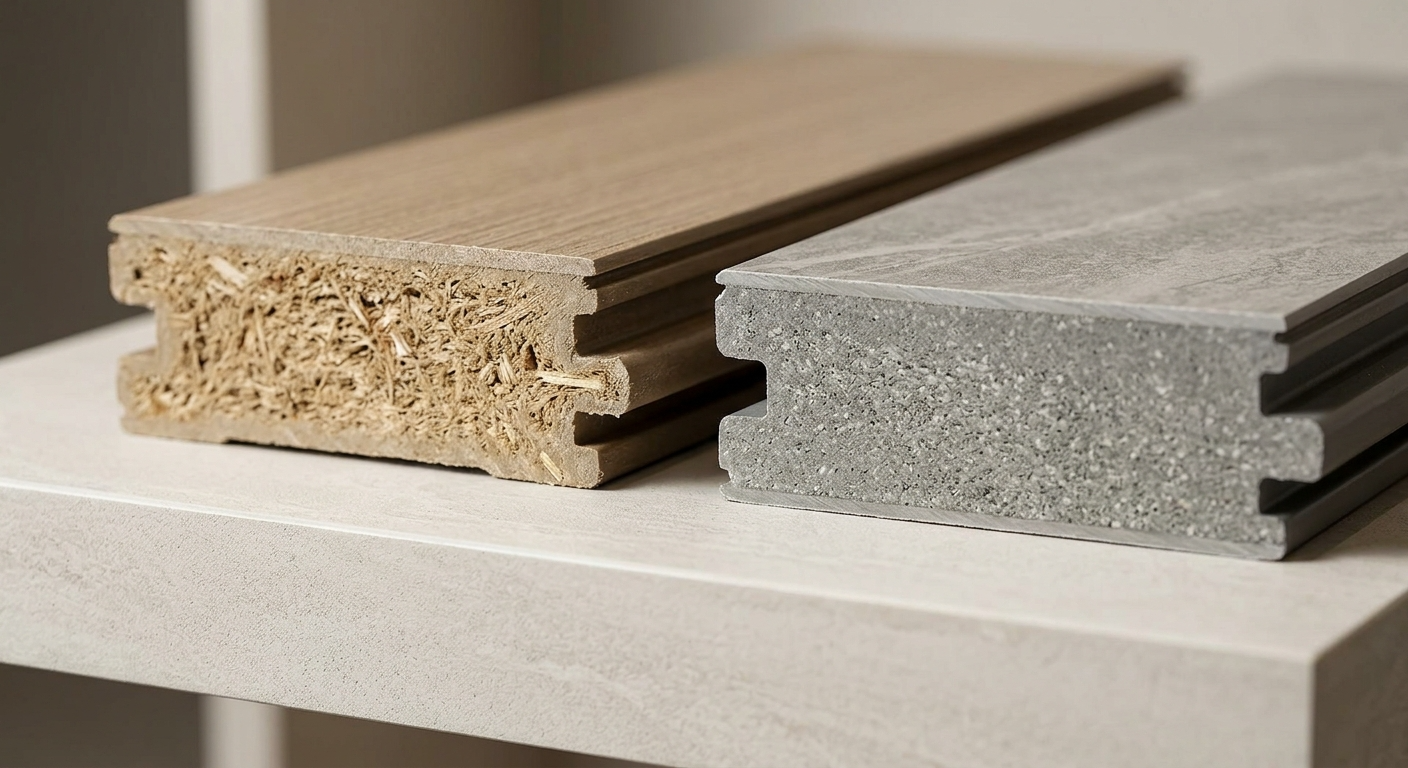
The main difference is the core material. WPC generally combines wood fiber or wood flour with a polymer matrix, while SPC typically uses calcium carbonate and PVC or other polymer materials to create a rigid mineral-based core.
For B2B buyers, the choice should be based on application, required rigidity, weight, surface design, installation conditions, budget, and project requirements—not simply on which material has a higher specification.
2. WPC vs SPC: Material Composition
The composition of the two products is fundamentally different.
| Feature | WPC Wall Panel | SPC Wall Panel |
|---|---|---|
| Full name | Wood Plastic Composite | Stone Plastic Composite |
| Main filler | Wood fiber/flour | Calcium carbonate |
| Polymer | PVC, PE, PP or similar | Usually PVC-based |
| Core structure | Wood-polymer composite | Mineral-polymer composite |
| Density | Typically lower than SPC | Typically higher |
| Rigidity | Moderate to high | High |
| Surface options | Wood grain, embossed, laminated | Marble, stone, wood, decorative film |
| Typical application | Interior decorative walls | Rigid interior wall systems |
Exact formulation varies by manufacturer. Therefore, buyers should request the technical datasheet and material composition instead of assuming that every WPC or SPC panel has identical performance.
3. WPC Wall Panels: Advantages and Characteristics
WPC wall panels are designed to combine the appearance of wood with the processing characteristics of polymers.
Their major advantages include:
- Wood-like decorative appearance
- Multiple colors and surface textures
- Relatively easy cutting and installation
- Good resistance to moisture for suitable indoor products
- Lower maintenance than natural wood
- Suitable for residential and commercial interiors
- Available in different widths, thicknesses, and surface finishes
WPC is particularly attractive when the project requires a warm wood appearance or decorative interior design.
For example, WPC panels are commonly considered for hotels, offices, restaurants, retail stores, residential interiors, reception areas, and feature walls.
However, WPC should not automatically be described as completely waterproof or suitable for every outdoor environment. Performance depends on the formulation, surface treatment, installation system, and exposure conditions.
4. SPC Wall Panels: Advantages and Characteristics
SPC wall panels use a mineral-polymer core, giving them a comparatively rigid structure.
The high mineral content can provide:
- High dimensional rigidity
- Strong resistance to deformation
- Stable panel structure
- Moisture resistance
- Easy-to-clean decorative surfaces
- Stone, marble, wood, and other visual effects
SPC is often selected for projects where rigidity and dimensional stability are important.
The dense core can also make SPC panels heavier than some WPC products. Therefore, transportation, handling, wall loading, and installation requirements should be considered when planning a large project.
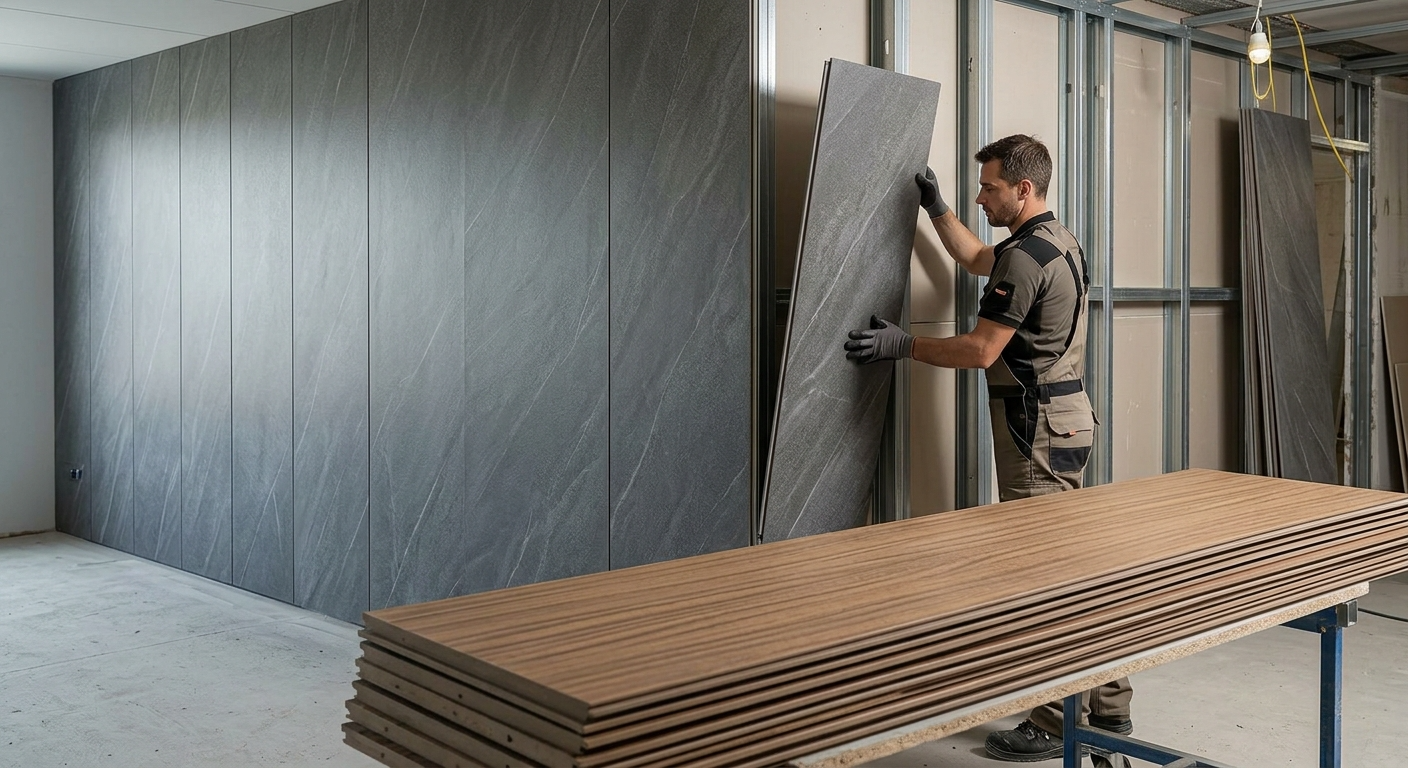
5. WPC vs SPC Wall Panels: Key Performance Comparison
The following table provides a practical comparison for procurement decisions.
| Performance | WPC | SPC |
|---|---|---|
| Material basis | Wood + polymer | Mineral filler + polymer |
| Rigidity | Medium–High | High |
| Weight | Generally lower | Generally higher |
| Moisture resistance | Good for suitable products | Good for suitable products |
| Dimensional stability | Good | Very good |
| Wood appearance | Excellent | Depends on surface layer |
| Stone/marble appearance | Available | Excellent |
| Cutting | Relatively easy | Requires suitable cutting tools |
| Installation | Usually straightforward | Usually straightforward |
| Design flexibility | High | High |
| Interior wall use | Excellent | Excellent |
These are general material characteristics rather than universal specifications. Actual density, thickness, impact resistance, water absorption, thermal expansion, and fire performance should be verified from the manufacturer’s test data.
6. WPC vs SPC: Which Is Better for Different Applications?
There is no universal winner because the ideal material depends on the project.
Choose WPC when:
- A wood-style appearance is important
- The project emphasizes decorative interior design
- Lower panel weight is preferred
- Custom colors and textures are required
- The application includes feature walls, hotels, offices, or residential interiors
Choose SPC when:
- Higher rigidity is a priority
- Stone or marble appearance is required
- Dimensional stability is especially important
- A dense mineral-polymer core is preferred
- The project requires rigid decorative panels
For commercial procurement, the best choice is the material that meets the project’s technical requirements at the lowest total installed cost.
7. WPC vs SPC Wall Panel Cost
Material price varies considerably depending on panel thickness, size, surface treatment, formulation, order quantity, packaging, and supplier location.
A simplified project calculation is:
Total Cost = Panel Cost + Accessories + Waste + Labor + Transportation
For example:
| Cost Factor | WPC | SPC |
|---|---|---|
| Material price | Supplier dependent | Supplier dependent |
| Accessories | Low–Moderate | Low–Moderate |
| Handling | Generally easier | May require more handling |
| Installation | Project dependent | Project dependent |
| Shipping weight | Usually lower | Usually higher |
| Final project cost | Application dependent | Application dependent |
For B2B buyers, a lower factory quotation does not necessarily mean a lower project cost. The correct comparison should use cost per installed m², including waste, accessories, labor, freight, and other expenses.
8. WPC vs SPC for Wholesale and B2B Projects
For importers, distributors, contractors, and developers, supplier selection is as important as material selection.
Before placing a bulk order, buyers should confirm:
- Panel dimensions and thickness
- Core material and formulation
- Density and weight per m²
- Surface treatment
- Fire-performance documentation, when required
- Water-resistance data
- Packaging specifications
- MOQ and production capacity
- Container loading quantity
- Warranty and quality-control procedures
For example, if two panels have the same nominal thickness but significantly different densities, their weight, rigidity, transportation cost, and installation characteristics may differ.
A professional WPC wall panel manufacturer should be able to provide samples, specifications, packaging information, and production details before mass production.
9. WPC vs SPC: Which One Should You Choose?
The decision can be simplified as follows:
WPC = wood-oriented decorative performance
SPC = mineral-oriented rigid performance
If the project is primarily focused on wood aesthetics, decorative flexibility, and relatively easy handling, WPC may be the better option.
If the project prioritizes rigidity, dimensional stability, and stone or marble decorative effects, SPC may be more appropriate.
For large projects, buyers should test samples under actual installation conditions before selecting the final product. The evaluation should include appearance, cutting, installation, joint alignment, surface durability, weight, and compatibility with the wall substrate.
10. Frequently Asked Questions
Is WPC better than SPC for wall panels?
Neither material is universally better. WPC uses a wood-polymer composite structure and is often selected for wood-style decorative applications, while SPC uses a mineral-polymer core and generally provides a more rigid structure. The better choice depends on the project’s design, wall condition, required rigidity, weight limitations, budget, and installation requirements.
Are WPC and SPC wall panels waterproof?
Both WPC and SPC wall panels can provide good moisture resistance when properly formulated and installed. However, “waterproof” should not be assumed for every product. Buyers should check water-absorption data, core composition, surface treatment, joint design, and installation instructions. Continuous exposure to water can also depend heavily on the substrate and sealing system.
Which is lighter, WPC or SPC?
WPC panels are generally lighter than SPC panels because SPC commonly contains a high proportion of mineral filler such as calcium carbonate. However, actual weight depends on panel thickness, density, dimensions, and formulation. For international shipping and large commercial projects, buyers should request the manufacturer’s kg/m² or kg/piece data before calculating logistics costs.
Which is easier to install, WPC or SPC?
Both can be relatively straightforward to install when the correct system is used. WPC can often be cut and processed with common woodworking-style tools, while the higher rigidity and density of SPC may require more appropriate cutting equipment. Installation difficulty also depends on panel dimensions, wall conditions, corners, openings, and the selected fixing method.
Is WPC or SPC better for commercial projects?
Both materials can be suitable for commercial interiors. WPC is often attractive for hotels, offices, restaurants, retail spaces, and decorative feature walls where wood aesthetics are important. SPC can be considered where rigid panels and stone or marble finishes are preferred. For commercial procurement, the final decision should be based on technical requirements, lifecycle cost, supply capacity, and installation performance.
Conclusion
WPC and SPC wall panels serve similar decorative purposes but use different composite technologies.
WPC combines wood-based filler with polymer materials, making it particularly suitable for wood-style decorative interiors. SPC combines mineral filler with polymer materials, producing a dense and rigid panel structure.
For B2B buyers, the most important comparison is not simply WPC vs SPC price. Evaluate material composition, density, thickness, weight, surface finish, installation requirements, logistics, durability, and total installed cost.
For wholesale projects, requesting samples and complete technical specifications from qualified manufacturers is the most reliable way to determine which material is appropriate for the application.
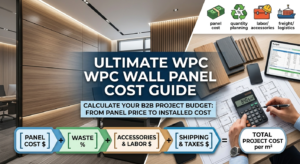
WPC Wall Panel Cost Calculator: Complete Project Cost Guide
Calculate WPC wall panel costs using wall area, panel price, waste, accessories, labor, shipping, and installation expenses.
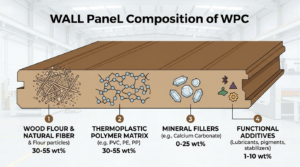
What Is WPC Wall Panel Made Of ? Materials, Composition & Manufacturing
Learn what WPC wall panels are made of, including wood fiber, plastic polymers, additives, material composition, and the complete manufacturing process.

WPC Wall Panels Wholesale : Complete B2B Buying Guide for Importers & Distributors
Learn how to source WPC wall panels wholesale. Compare specifications, pricing, MOQ, certifications, suppliers, shipping, and B2B purchasing strategies.