
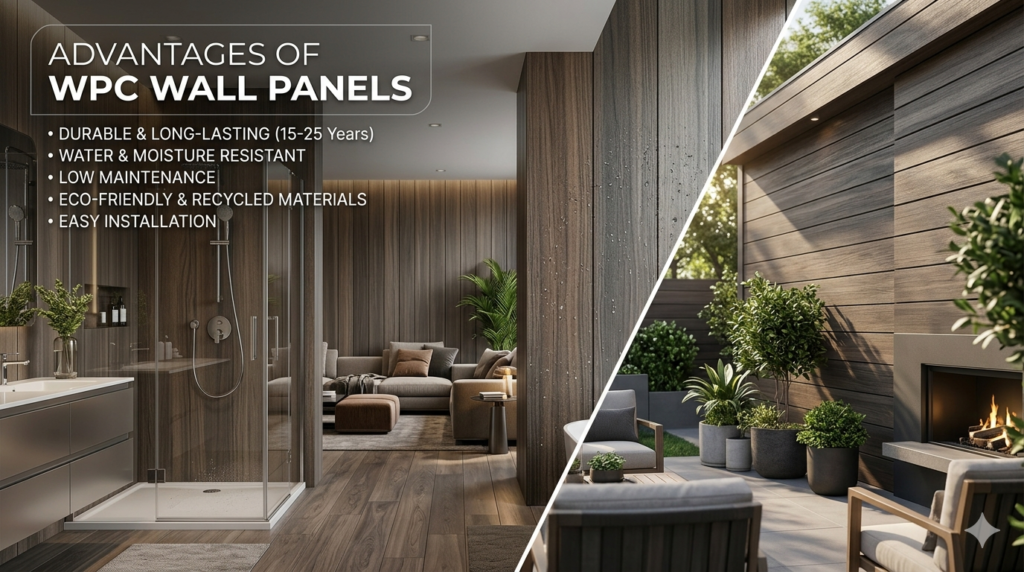
What Are the Advantages of WPC Wall Panels?
TL;DR
WPC wall panels offer a durable, moisture-resistant, and low-maintenance alternative to traditional materials like wood and PVC. They combine wood fibers and thermoplastics to achieve improved structural stability, longer lifespan (typically 15–25 years), and resistance to water, insects, and deformation. According to industry data, WPC panels reduce maintenance costs by up to 30% compared to wood, making them highly suitable for residential, commercial, and high-humidity environments.
What Are WPC Wall Panels?
WPC wall panels are composite building materials made from wood fibers and thermoplastic polymers such as polyethylene or polypropylene. This combination creates a material that mimics the appearance of wood while offering enhanced durability and environmental resistance.
WPC refers to Wood-Plastic Composite, a material engineered to combine the rigidity of wood with the flexibility and moisture resistance of plastic. Studies show that typical WPC formulations contain 50–70% wood fiber and 30–50% plastic components.
WPC wall panels are prefabricated cladding systems designed for interior and exterior wall applications. These panels are widely used in construction projects due to their standardized dimensions, consistent quality, and ease of installation.
How Do WPC Wall Panels Work?
WPC panels function by leveraging the structural reinforcement of wood fibers and the protective properties of polymers. The plastic component forms a barrier that prevents moisture penetration, while the wood fibers provide rigidity and texture.
The extrusion manufacturing process ensures uniform density and structural integrity. According to industry data, WPC panels typically achieve water absorption rates below 1%, significantly lower than natural wood, which can exceed 10–15% in humid conditions.
Surface treatments such as co-extrusion or lamination further enhance UV resistance and scratch resistance. This makes WPC panels suitable for both indoor and outdoor environments, including high-traffic commercial spaces.
What Are the Main Advantages of WPC Wall Panels?
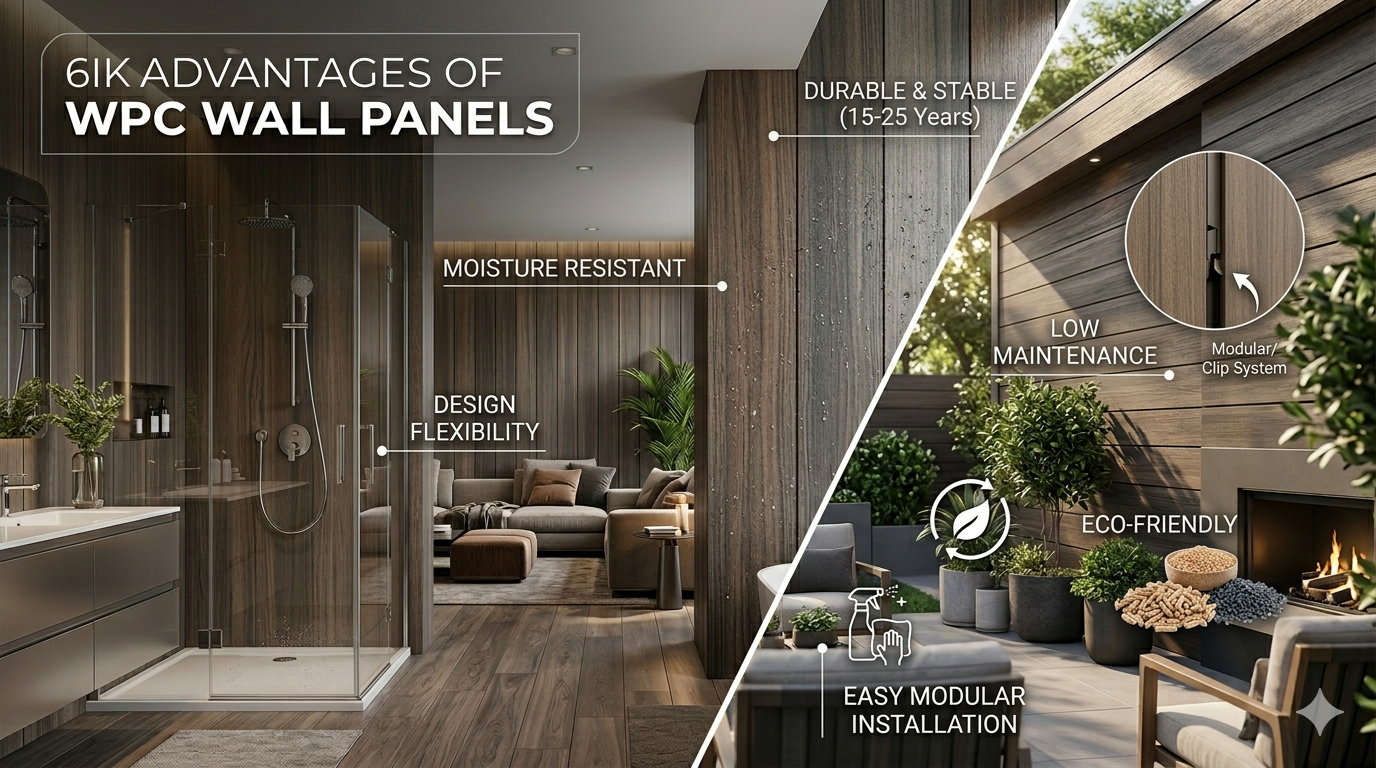
1. Why Are WPC Panels Highly Durable?
WPC panels are engineered for long-term structural stability under varying environmental conditions. They resist cracking, warping, and splitting, which are common issues in natural wood.
According to lifecycle assessments, WPC wall panels typically last 15–25 years with minimal degradation. This lifespan is 2–3 times longer than untreated wood in outdoor environments.
2. How Do WPC Panels Resist Moisture and Water?
WPC panels are inherently water-resistant due to their polymer composition. The plastic matrix prevents water absorption, reducing the risk of swelling and mold growth.
Studies show that WPC materials maintain dimensional stability even at humidity levels above 80%. This makes them ideal for bathrooms, kitchens, and coastal installations.
3. Why Are WPC Panels Low Maintenance?
WPC panels require minimal upkeep compared to traditional materials. They do not need painting, sealing, or regular chemical treatments.
Maintenance costs can be reduced by up to 30–40% over a 10-year period compared to wood cladding. Cleaning typically involves only water or mild detergent, making them suitable for large-scale commercial applications.
4. Are WPC Panels Environmentally Friendly?
WPC panels are considered environmentally efficient because they utilize recycled materials. Many manufacturers use reclaimed wood fibers and recycled plastics in production.
According to industry reports, up to 90% of raw materials in WPC products can be recycled content. Additionally, WPC panels reduce deforestation by replacing natural timber in construction.
5. How Easy Is Installation?
WPC wall panels are designed with modular systems such as tongue-and-groove or clip-based installation. This reduces labor time and installation complexity.
Installation efficiency can improve by 30–50% compared to traditional wall finishes like tiles or wood planks. This is especially valuable for large commercial projects with strict timelines.
6. Do WPC Panels Offer Design Flexibility?
WPC panels are available in a wide range of textures, colors, and finishes. They can replicate natural wood grain, stone textures, or modern matte finishes.
Manufacturing processes allow consistent color matching across batches, which is difficult to achieve with natural materials. This ensures uniform aesthetics in large installations.
WPC vs PVC: What Are the Differences?
| Feature | WPC Wall Panels | PVC Wall Panels |
|---|---|---|
| Material Composition | Wood fiber + plastic composite | Fully plastic (polyvinyl chloride) |
| Strength | Higher structural rigidity | Lower rigidity |
| Appearance | Natural wood-like texture | Artificial appearance |
| Water Resistance | Excellent (<1% absorption) | Excellent |
| Environmental Impact | Uses recycled materials | Less eco-friendly |
| Lifespan | 15–25 years | 10–15 years |
WPC panels offer better structural strength and a more natural appearance compared to PVC. However, PVC panels may have a lower initial cost, making them suitable for short-term applications.
WPC vs Wood: Which Is Better?
WPC panels outperform natural wood in terms of moisture resistance, durability, and maintenance requirements. Wood is prone to termite damage, rot, and warping, especially in humid climates.
According to construction data, wood can require maintenance every 1–2 years, while WPC panels typically require none over the same period. However, natural wood may still be preferred for projects requiring authentic material aesthetics.
Where Are WPC Wall Panels Commonly Used?
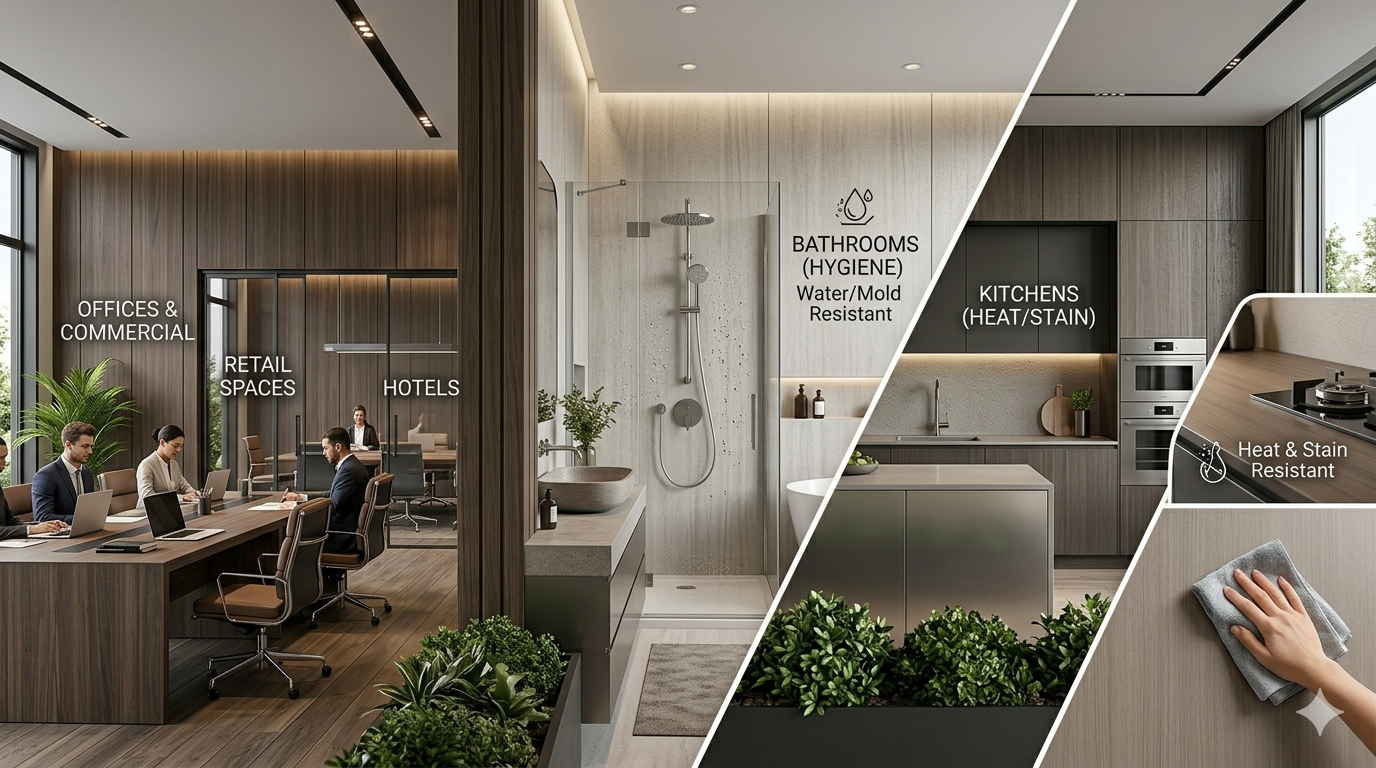
1. Why Are WPC Panels Used in Bathrooms?
WPC panels are widely used in bathrooms due to their water resistance and anti-mold properties. Their low water absorption rate (<1%) prevents swelling and surface damage.
They also reduce the need for grout lines, which are common in tiles and prone to mold accumulation. This improves hygiene and reduces maintenance frequency.
2. Are WPC Panels Suitable for Kitchens?
WPC panels are suitable for kitchens because they resist moisture, stains, and moderate heat exposure. Their smooth surfaces make cleaning easier compared to porous materials.
Industry testing shows that WPC surfaces can withstand temperature fluctuations between 0°C and 60°C without deformation, making them suitable for residential kitchens.
3. How Are WPC Panels Used in Commercial Spaces?
WPC panels are widely used in offices, retail stores, and hotels due to their durability and consistent appearance. Their resistance to scratches and impacts makes them suitable for high-traffic areas.
Commercial projects benefit from reduced maintenance costs and faster installation times, which can lower overall project expenses by 10–20%.
What Are the Limitations of WPC Wall Panels?
WPC panels have higher upfront costs compared to PVC or basic wood panels. However, this cost is often offset by lower maintenance and longer lifespan.
Thermal expansion is another factor to consider. WPC materials can expand slightly under high temperatures, typically around 1–2 mm per meter, requiring proper installation spacing.
Additionally, WPC panels may not replicate the exact tactile feel of solid wood, which can be a consideration for premium architectural designs.
Expert Insight: Why WPC Panels Are Gaining Market Share
The global WPC market has been growing at an estimated CAGR of 10–12% over the past decade. This growth is driven by increasing demand for low-maintenance and sustainable construction materials.
From a B2B perspective, WPC panels reduce lifecycle costs, simplify installation logistics, and improve project predictability. These factors make them particularly attractive for large-scale residential developments and commercial construction.
Manufacturers with integrated production and export capabilities can further ensure consistent quality and supply chain reliability, which are critical for international buyers.
WPC vs SPC Wall Panels : What’s the Difference?
Compare WPC vs SPC wall panels by materials, structure, waterproofing, durability, installation, cost, and applications to choose the right panel.
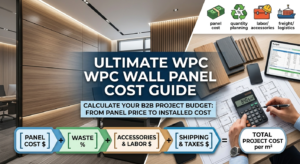
WPC Wall Panel Cost Calculator: Complete Project Cost Guide
Calculate WPC wall panel costs using wall area, panel price, waste, accessories, labor, shipping, and installation expenses.
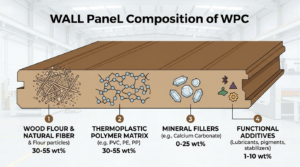
What Is WPC Wall Panel Made Of ? Materials, Composition & Manufacturing
Learn what WPC wall panels are made of, including wood fiber, plastic polymers, additives, material composition, and the complete manufacturing process.