
TL;DR
WPC wall panels are widely used in hotel projects due to their moisture resistance, durability, and low maintenance requirements. With water absorption below 1% and lifespans of 15–25 years, they perform well in high-traffic and high-humidity environments. They also reduce installation time by 30–50% compared to traditional materials, making them a cost-efficient solution for modern hospitality design.
What are WPC wall panels and why are they used in hotel projects?
WPC wall panels are composite materials made from wood fibers (typically 50–70%) combined with thermoplastics such as PVC, PE, or PP. This structure provides durability, moisture resistance, and consistent appearance.
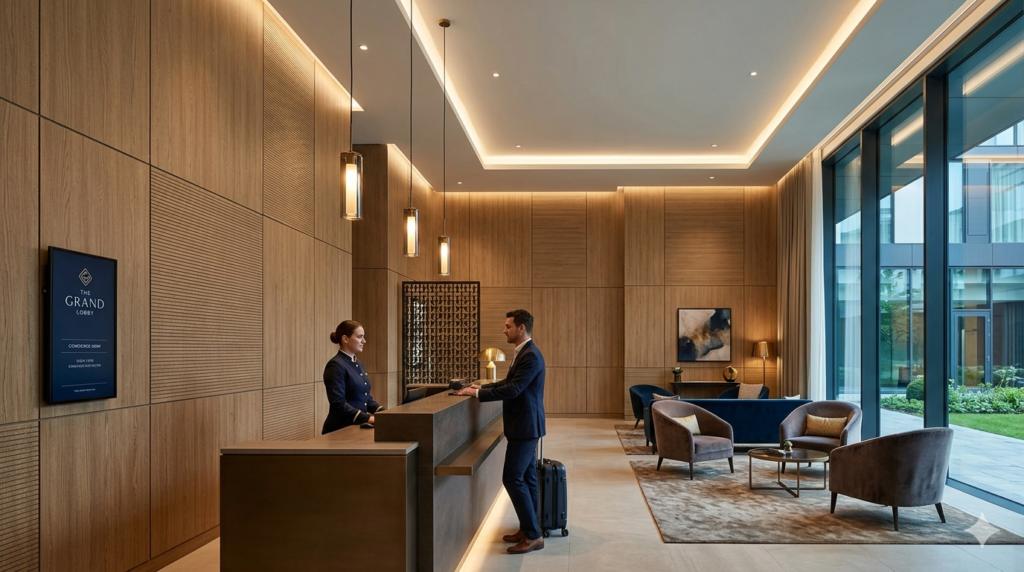
WPC wall panels for hotel projects refer to interior and exterior cladding systems designed to meet the demands of high-traffic hospitality environments. According to industry data, water absorption is typically below 1%, ensuring stability in humid conditions.
Hotels use WPC panels to balance aesthetics, performance, and lifecycle cost efficiency.
Why are WPC panels suitable for hotel environments?
Hotel environments require materials that can withstand frequent use, cleaning, and environmental exposure.
Key Suitability Factors
- High Traffic Durability:
Resistant to wear and surface damage in corridors and lobbies - Moisture Resistance:
Suitable for bathrooms, spas, and humid regions - Low Maintenance:
No need for repainting or sealing - Consistent Appearance:
Uniform finish across large surfaces - Hygienic Surface:
Easy to clean and maintain
These characteristics align with operational requirements in hospitality projects.
What are the main applications of WPC wall panels in hotels?
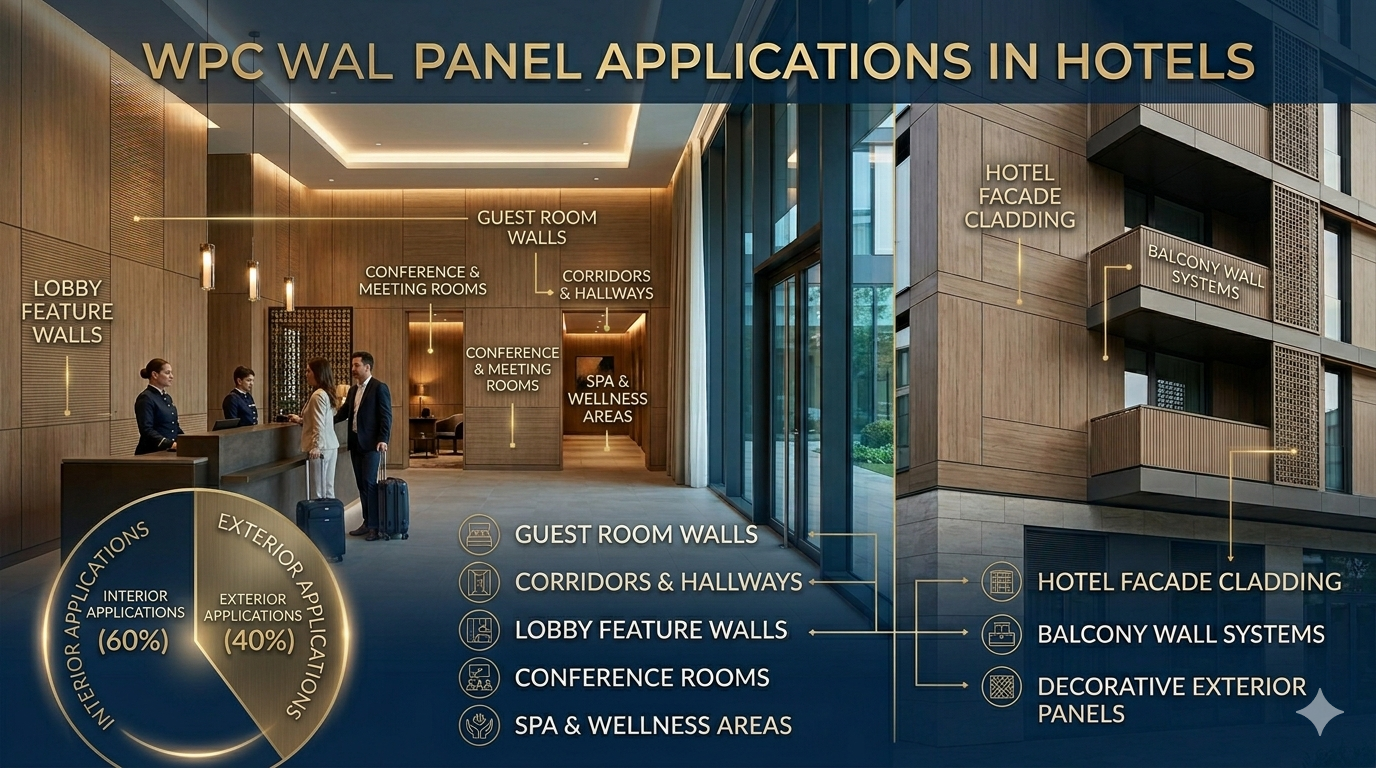
Interior Applications
- Guest room walls
- Hotel corridors and hallways
- Lobby feature walls
- Conference and meeting rooms
- Spa and wellness areas
Exterior Applications
- Hotel facade cladding
- Balcony wall systems
- Decorative exterior panels
According to market data, interior applications account for over 60% of WPC usage in hotel projects.
How do WPC panels perform compared to traditional hotel materials?
| Feature | WPC Wall Panel | Natural Wood | Ceramic Tile | PVC Panel |
|---|---|---|---|---|
| Water Resistance | High (<1%) | Low (8–12%) | Very high | Fully waterproof |
| Durability | 15–25 years | 10–20 years | 20–30 years | 10–20 years |
| Maintenance | Low | High | Medium | Low |
| Installation Time | Fast | Medium | Slow | Fast |
| Aesthetic | Wood-like | Natural | Glossy | Synthetic |
WPC panels provide a balanced solution between performance, aesthetics, and installation efficiency.
What are the key advantages for hotel projects?
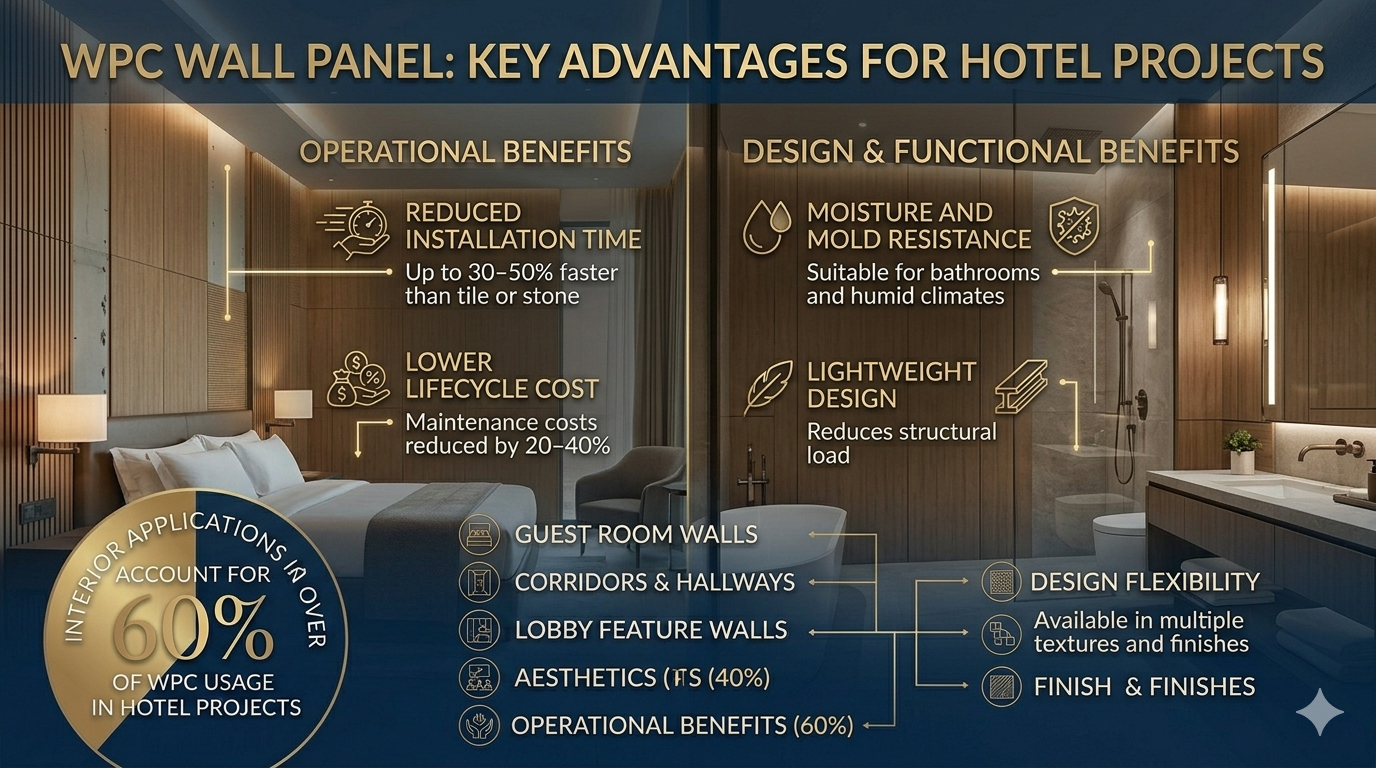
Operational Benefits
- Reduced Installation Time:
Up to 30–50% faster than tile or stone - Lower Lifecycle Cost:
Maintenance costs reduced by 20–40% - Moisture and Mold Resistance:
Suitable for bathrooms and humid climates - Lightweight Design:
Reduces structural load - Design Flexibility:
Available in multiple textures and finishes
These benefits contribute to faster project completion and lower operational expenses.
What are the limitations of WPC panels in hotel use?
Despite strong performance, WPC panels have limitations that must be considered.
- Fire Rating:
Standard WPC panels may not meet strict fire codes without fire-retardant formulations - Surface Durability:
Less resistant to heavy impact compared to stone or metal. - Thermal Expansion:
Requires installation gaps of 2–3 mm per meter - UV Sensitivity:
Exterior panels may fade over 5–10 years
Proper material selection and system design are essential for compliance and durability.
What technical factors should hotels consider before choosing WPC panels?
Key Selection Criteria
- Fire Certification
- Choose panels meeting local fire safety standards (e.g., B1 or Class A where required)
- Panel Type
- Co-extruded panels offer better durability and UV resistance
- Installation System
- Use concealed fastening systems for aesthetics and safety
- Environmental Conditions
- Consider humidity, temperature, and UV exposure
- Maintenance Plan
- Ensure cleaning procedures align with panel specifications
According to industry data, improper specification can reduce system lifespan by up to 25%.
How long do WPC panels last in hotel environments?
WPC wall panels typically last 15–25 years in hotel environments, depending on usage intensity and installation quality.
In high-traffic areas such as corridors, lifespan may be slightly reduced due to wear, while in guest rooms and decorative areas, panels can maintain appearance for longer periods.
Their resistance to moisture, mold, and daily cleaning ensures stable performance across various hotel zones.
Expert Insight: Why hotels are increasingly choosing WPC panels
Hotels prioritize materials that reduce operational costs while maintaining design quality. WPC panels meet this requirement by combining durability with low maintenance.
From a lifecycle perspective, reduced maintenance and faster installation significantly lower total project costs. Industry trends indicate that WPC adoption in hospitality projects is growing at 10–12% annually.
However, successful implementation depends on selecting fire-rated panels and ensuring proper installation systems.
WPC vs SPC Wall Panels : What’s the Difference?
Compare WPC vs SPC wall panels by materials, structure, waterproofing, durability, installation, cost, and applications to choose the right panel.
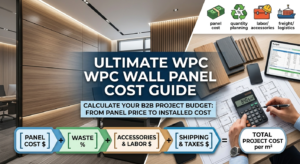
WPC Wall Panel Cost Calculator: Complete Project Cost Guide
Calculate WPC wall panel costs using wall area, panel price, waste, accessories, labor, shipping, and installation expenses.
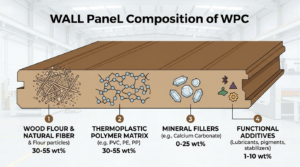
What Is WPC Wall Panel Made Of ? Materials, Composition & Manufacturing
Learn what WPC wall panels are made of, including wood fiber, plastic polymers, additives, material composition, and the complete manufacturing process.