
Is WPC Wall Panel 100% Waterproof? A Technical Explanation
TL;DR
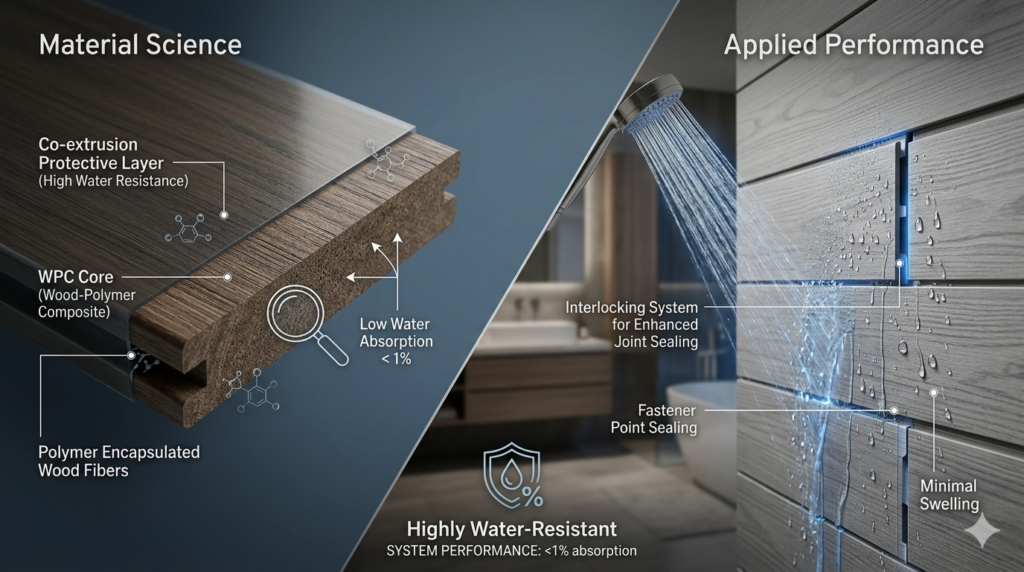
WPC wall panels are not 100% waterproof, but they are highly water-resistant. Their composite structure limits water absorption to below 1%, preventing swelling, rot, and mold under normal conditions. However, joints, cuts, and improper installation can allow water ingress. In practical applications, WPC panels perform as “waterproof systems” when correctly installed.
What does “waterproof” mean in WPC wall panels?
Waterproof in the context of WPC wall panels refers to the material’s ability to resist water penetration and maintain structural integrity under moisture exposure. It does not mean absolute impermeability under all conditions.
WPC wall panel waterproof performance is defined by low water absorption rates, typically below 1%, according to industry data. This level of resistance is sufficient for most indoor and outdoor applications.
In construction standards, materials with such low absorption are classified as water-resistant rather than fully waterproof.
Are WPC wall panels truly 100% waterproof?
WPC wall panels are not 100% waterproof in a strict technical sense. While the material itself resists water penetration, system-level factors such as joints and installation methods affect overall performance.
The core material is engineered to repel water due to polymer encapsulation of wood fibers. However, cut edges, fastener points, and seams can allow moisture entry if not properly sealed.
In real-world applications, properly installed WPC systems can function as waterproof wall solutions, especially in bathrooms, kitchens, and exterior cladding.
Why are WPC panels highly water-resistant?
WPC panels achieve high water resistance through a combination of material composition and manufacturing processes:
- Polymer Matrix: Thermoplastics encapsulate wood fibers, reducing porosity
- Low Absorption Rate: Typically below 1%, compared to 8–12% for wood
- Dense Structure: Extrusion minimizes internal voids
- Surface Protection: Co-extrusion layers enhance moisture resistance
Studies show that WPC panels maintain dimensional stability with less than 0.5% swelling under prolonged moisture exposure.
What factors affect waterproof performance?
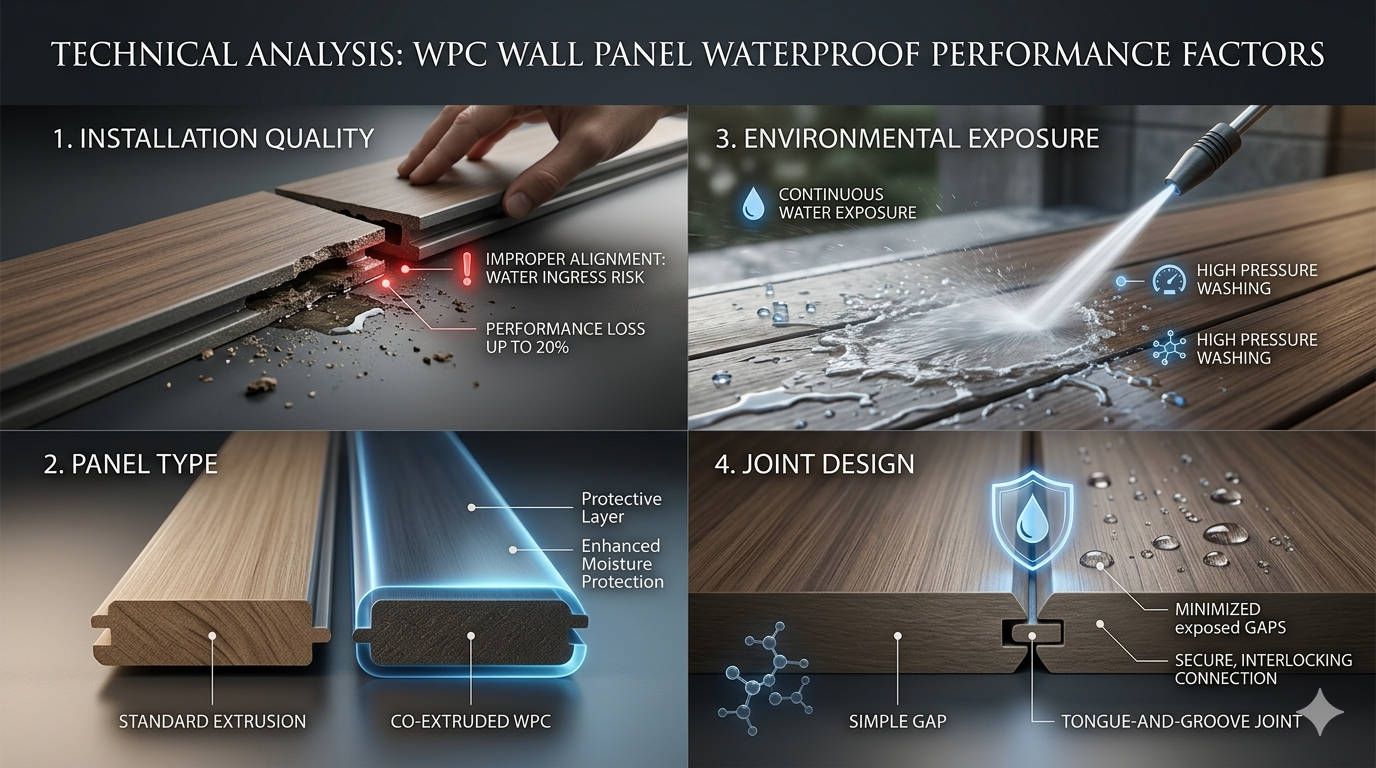
Water resistance in WPC wall panels depends on multiple technical and installation-related factors.
1. Installation Quality
Improper installation can reduce waterproof performance by up to 20%. Gaps, unsealed joints, and poor substructure design allow water ingress.
2. Panel Type
Co-extruded WPC panels offer better moisture protection than standard extruded panels due to an additional protective layer.
3. Environmental Exposure
Continuous water exposure, such as standing water or high-pressure washing, can challenge the limits of WPC materials.
4. Joint Design
Tongue-and-groove or interlocking systems improve water resistance by minimizing exposed gaps.
How do WPC panels compare to truly waterproof materials?
| Material | Waterproof Level | Water Absorption | Key Limitation |
|---|---|---|---|
| WPC Panel | High (not 100%) | <1% | Joint sealing required |
| PVC Panel | Fully waterproof | ~0% | Lower structural strength |
| Ceramic Tile | Fully waterproof (surface) | ~0% | Requires grout maintenance |
| Solid Wood | Not waterproof | 8–12% | Swelling and decay |
WPC panels offer a balance between performance and aesthetics, but they do not achieve absolute waterproofing like PVC or ceramic surfaces.
Can WPC wall panels be used in wet areas?
WPC wall panels are widely used in wet areas such as bathrooms, kitchens, and basements. Their low water absorption and resistance to mold make them suitable for high-humidity environments.
However, they are not recommended for direct, continuous water immersion, such as inside swimming pools or water tanks. In these cases, fully waterproof materials are required.
Proper sealing and installation are essential to ensure long-term performance in wet environments.
What are the advantages of WPC panels in moisture-prone environments?
- Moisture Resistance: Prevents swelling and structural damage
- Mold Resistance: Reduces risk of fungal growth
- Low Maintenance: No need for waterproof coatings or sealing
- Durability: Lifespan of 15–25 years in outdoor conditions
- Dimensional Stability: Expansion limited to 2–3 mm per meter
These properties make WPC panels a practical solution for environments where traditional wood would fail.
What are the limitations of WPC waterproof performance?
Despite strong resistance, WPC panels have limitations that must be considered:
- Not Fully Impermeable: Cannot withstand long-term water immersion
- Joint Vulnerability: Seams and edges require proper sealing
- Thermal Expansion: Expansion gaps are necessary to prevent deformation
- Installation Sensitivity: Performance depends heavily on correct installation
Understanding these limitations is critical for ensuring correct application and long-term durability.
Expert Insight: Waterproof vs water-resistant in real-world projects
The distinction between waterproof and water-resistant is often misunderstood in construction. WPC panels fall into the water-resistant category but can function as waterproof systems when installed correctly.
From a technical perspective, system design—including sealing, drainage, and ventilation—is more important than material classification alone. Industry data shows that installation quality can influence performance by more than 30%.
For most architectural applications, WPC panels provide sufficient moisture protection while offering better aesthetics and sustainability than fully synthetic materials.

WPC vs SPC Wall Panels : What’s the Difference?
Compare WPC vs SPC wall panels by materials, structure, waterproofing, durability, installation, cost, and applications to choose the right panel.
WPC Wall Panel Cost Calculator: Complete Project Cost Guide
Calculate WPC wall panel costs using wall area, panel price, waste, accessories, labor, shipping, and installation expenses.
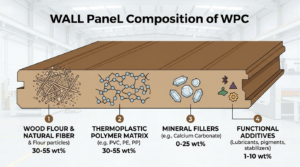
What Is WPC Wall Panel Made Of ? Materials, Composition & Manufacturing
Learn what WPC wall panels are made of, including wood fiber, plastic polymers, additives, material composition, and the complete manufacturing process.