
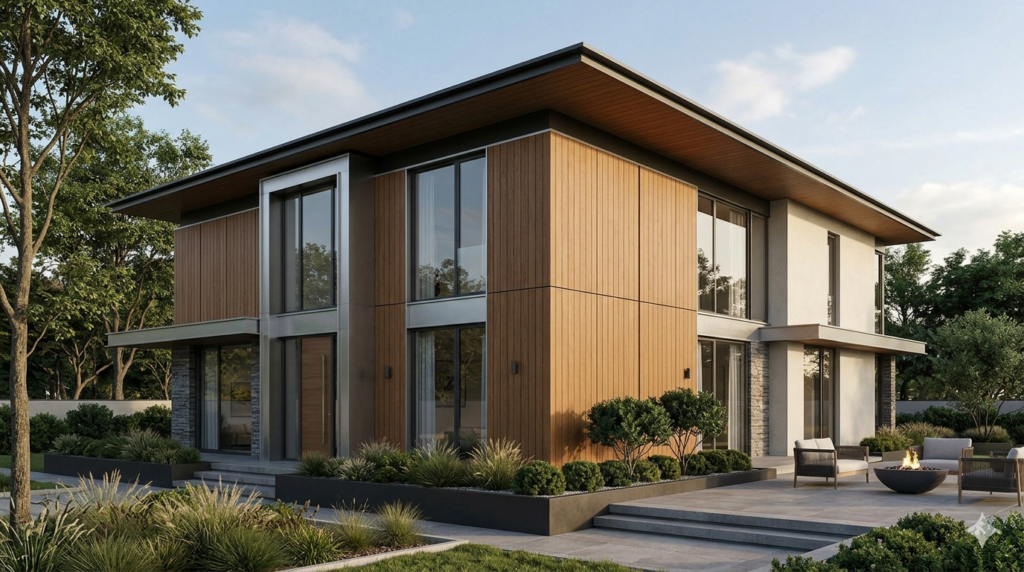
Can WPC Wall Panels Be Used Outdoors? A Technical Guide
TL;DR
Yes, WPC (Wood Plastic Composite) wall panels can be used outdoors. They are engineered for moisture resistance, UV stability, and durability, with water absorption typically below 1% and service life of 15–25 years. However, proper installation, ventilation gaps, and UV-protected formulations are essential to ensure long-term outdoor performance.
What are WPC wall panels and why are they suitable for outdoor use?
WPC wall panels are composite materials made from wood fibers (typically 50–70%) and thermoplastics such as PE, PP, or PVC. This structure creates a durable, low-porosity material designed for environmental exposure.
WPC wall panels refer to cladding systems engineered to resist moisture, insects, and moderate UV exposure. According to industry data, water absorption is typically below 1%, which supports outdoor durability.
Their combination of stability and low maintenance makes them increasingly popular for exterior applications.
Can WPC wall panels really withstand outdoor conditions?
WPC wall panels are designed to withstand typical outdoor conditions, including rain, humidity, and temperature fluctuations. Their polymer matrix protects wood fibers from direct exposure to water and biological degradation.
In most climates, WPC panels maintain structural stability within temperature ranges of -20°C to 60°C. Expansion rates are typically 2–3 mm per meter, which must be considered during installation.
However, extreme conditions such as prolonged UV exposure or high heat may affect surface color and long-term appearance.
What outdoor performance characteristics do WPC panels offer?
Key Outdoor Properties
- Water Resistance:
Water absorption <1%, preventing swelling and rot - UV Resistance:
UV-stabilized formulations reduce fading by 30–50% - Insect Resistance:
Polymer encapsulation prevents termite damage - Durability:
Lifespan of 15–25 years in outdoor environments - Low Maintenance:
No need for painting or sealing
These properties make WPC panels suitable for a wide range of exterior applications.
Where are WPC wall panels commonly used outdoors?
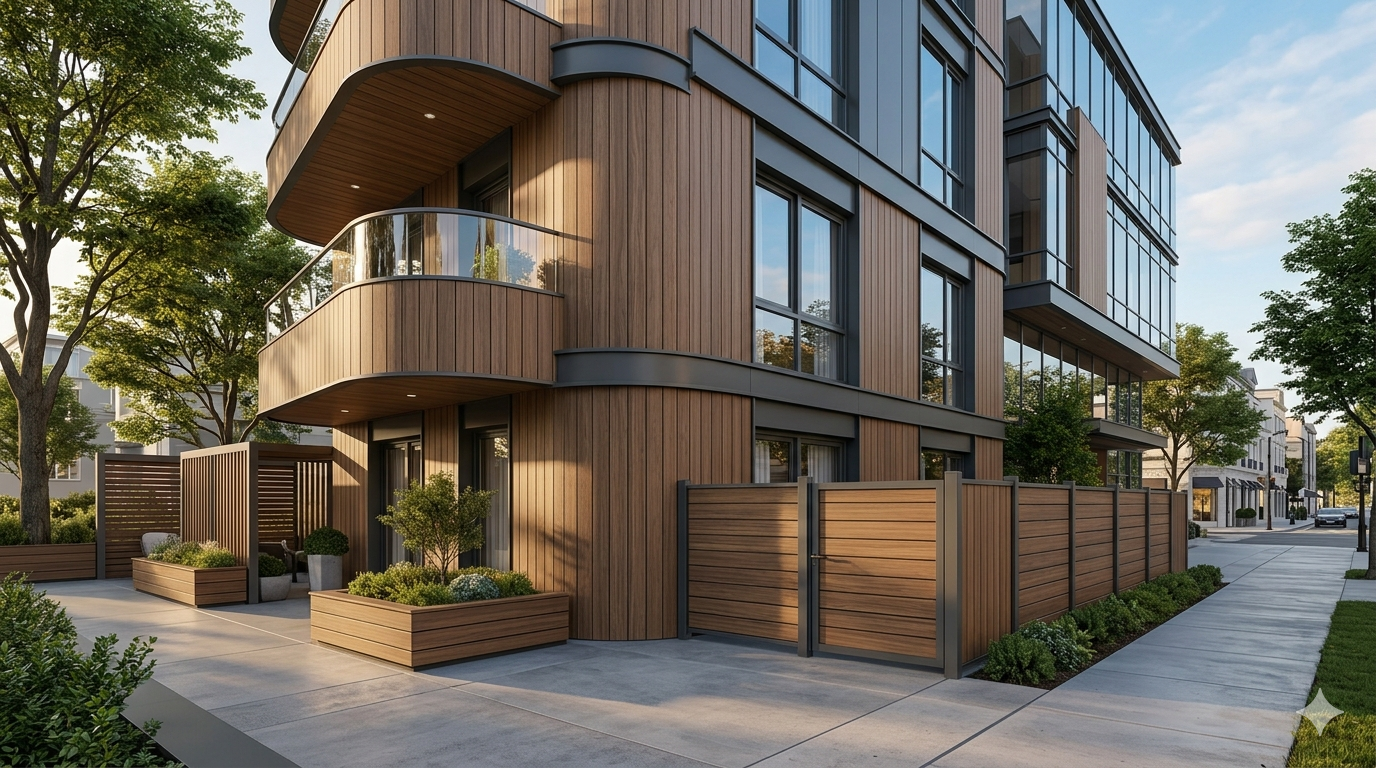
Typical Outdoor Applications
- Residential exterior facades
- Balcony and terrace wall cladding
- Garden and landscape structures
- Commercial building exteriors
- Fence and boundary wall systems
According to market data, WPC exterior applications have grown by over 10–15% annually, driven by demand for low-maintenance materials.
How do WPC panels compare to traditional outdoor materials?
| Feature | WPC Wall Panel | Solid Wood | Aluminum Panel |
|---|---|---|---|
| Water Resistance | High (<1%) | Low (8–12%) | Excellent (0%) |
| UV Resistance | Moderate–High | Low | Very high |
| Lifespan | 15–25 years | 5–15 years (untreated) | 30–50+ years |
| Maintenance | Low | High | Very low |
| Aesthetic | Wood-like | Natural wood | Metallic |
WPC panels provide a balance between durability and aesthetics, while aluminum offers maximum longevity and wood provides natural appearance with higher maintenance.
What are the installation requirements for outdoor WPC panels?
Critical Installation Guidelines
- Expansion Gaps
Maintain 2–3 mm per meter to accommodate thermal movement - Ventilation System
Ensure airflow behind panels to prevent moisture buildup - Substructure Material
Use corrosion-resistant metal or treated wood frames - Fastening System
Use concealed clips or stainless-steel screws - Drainage Design
Avoid water accumulation at panel joints
Improper installation can reduce performance by 20–30%, according to industry studies.
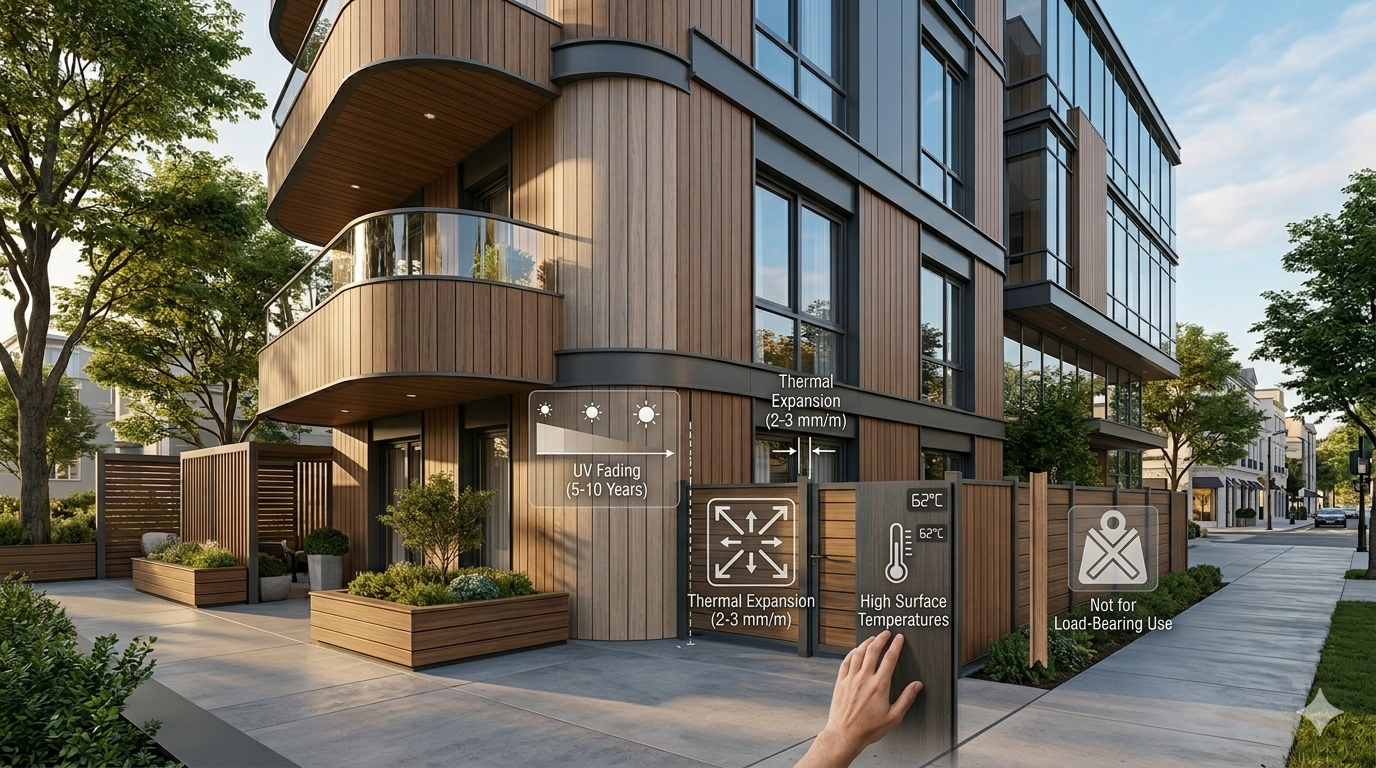
What are the limitations of using WPC panels outdoors?
While WPC panels perform well outdoors, they are not without limitations.
- UV Fading:
Color fading may occur after 5–10 years depending on exposure - Thermal Expansion:
Expansion requires careful installation planning - Surface Temperature:
Dark colors can reach high temperatures under direct sunlight - Structural Use:
Not suitable for load-bearing applications
Understanding these limitations is essential for correct material selection.
How long do WPC wall panels last outdoors?
WPC wall panels typically last 15–25 years in outdoor environments. Their resistance to moisture, insects, and moderate UV exposure supports long-term durability.
Performance depends on:
- Climate conditions
- UV exposure intensity
- Installation quality
- Panel formulation (co-extruded vs standard)
High-quality co-extruded panels often achieve longer lifespans due to enhanced surface protection.
Expert Insight: When should you choose WPC for exterior use?
WPC panels are ideal for projects that require a balance between aesthetics, durability, and cost efficiency. They are particularly effective in residential and mid-rise commercial applications.
However, for extreme environments such as coastal, industrial, or high-rise buildings, materials like aluminum may provide better long-term performance.
Industry trends show increasing adoption of WPC in outdoor construction due to its predictable lifecycle cost and reduced maintenance requirements.
WPC vs SPC Wall Panels : What’s the Difference?
Compare WPC vs SPC wall panels by materials, structure, waterproofing, durability, installation, cost, and applications to choose the right panel.
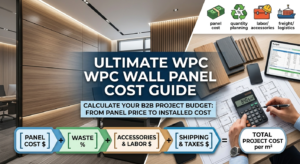
WPC Wall Panel Cost Calculator: Complete Project Cost Guide
Calculate WPC wall panel costs using wall area, panel price, waste, accessories, labor, shipping, and installation expenses.
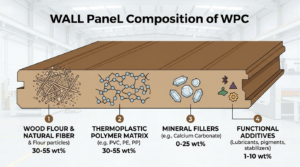
What Is WPC Wall Panel Made Of ? Materials, Composition & Manufacturing
Learn what WPC wall panels are made of, including wood fiber, plastic polymers, additives, material composition, and the complete manufacturing process.