
Introduction
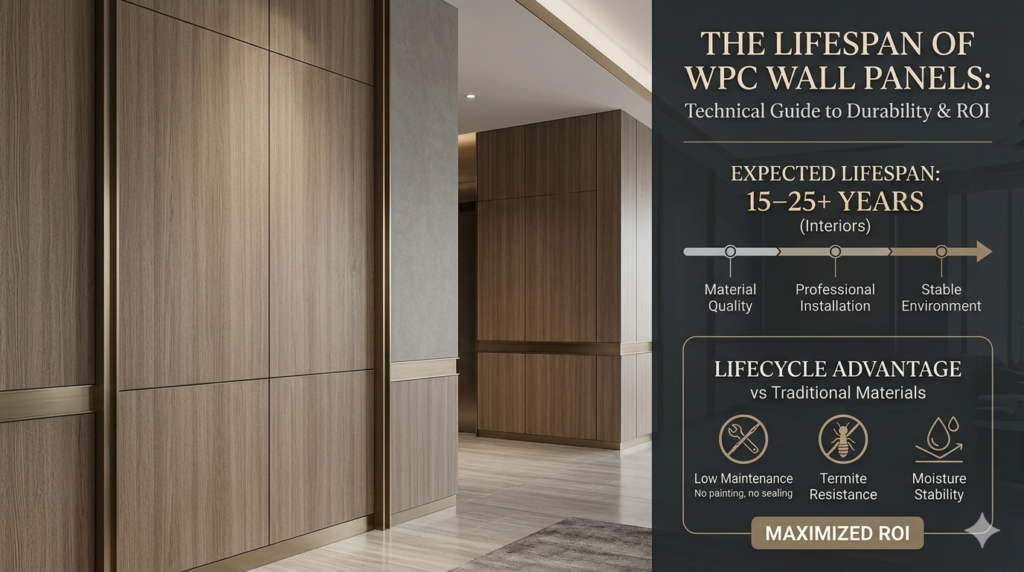
Understanding the lifespan of WPC wall panels is critical for architects, developers, contractors, and procurement professionals making long-term investment decisions in both residential and commercial projects. In modern construction, materials are no longer selected solely for aesthetics—they must deliver durability, stability, and a strong return on investment (ROI).
Wood Plastic Composite (WPC) wall panels have emerged as a high-performance alternative to traditional materials such as solid wood, PVC, and metal. By combining wood fibers with thermoplastics, WPC panels offer a unique balance of natural appearance and engineered resilience.
This comprehensive guide explores the real-world lifespan of WPC wall panels, the factors influencing their longevity, performance benchmarks, maintenance requirements, and how they compare with other materials in terms of durability and lifecycle cost.
What Is the Typical Lifespan of WPC Wall Panels?
The lifespan of WPC wall panels typically ranges from:
- 10 to 25 years for interior applications
- 15 to 30 years for high-quality, well-maintained installations
In controlled indoor environments, premium-grade WPC panels can exceed 25 years without significant degradation in structural integrity or appearance.
Lifespan Classification by Application
| Application Type | Expected Lifespan | Key Conditions |
|---|---|---|
| Residential Interiors | 15–25 years | Low wear, stable environment |
| Commercial Interiors | 10–20 years | High traffic, moderate wear |
| High-End Installations | 20–30 years | Premium materials, proper installation |
| Humid Environments | 10–15 years | Bathrooms, kitchens, high moisture |
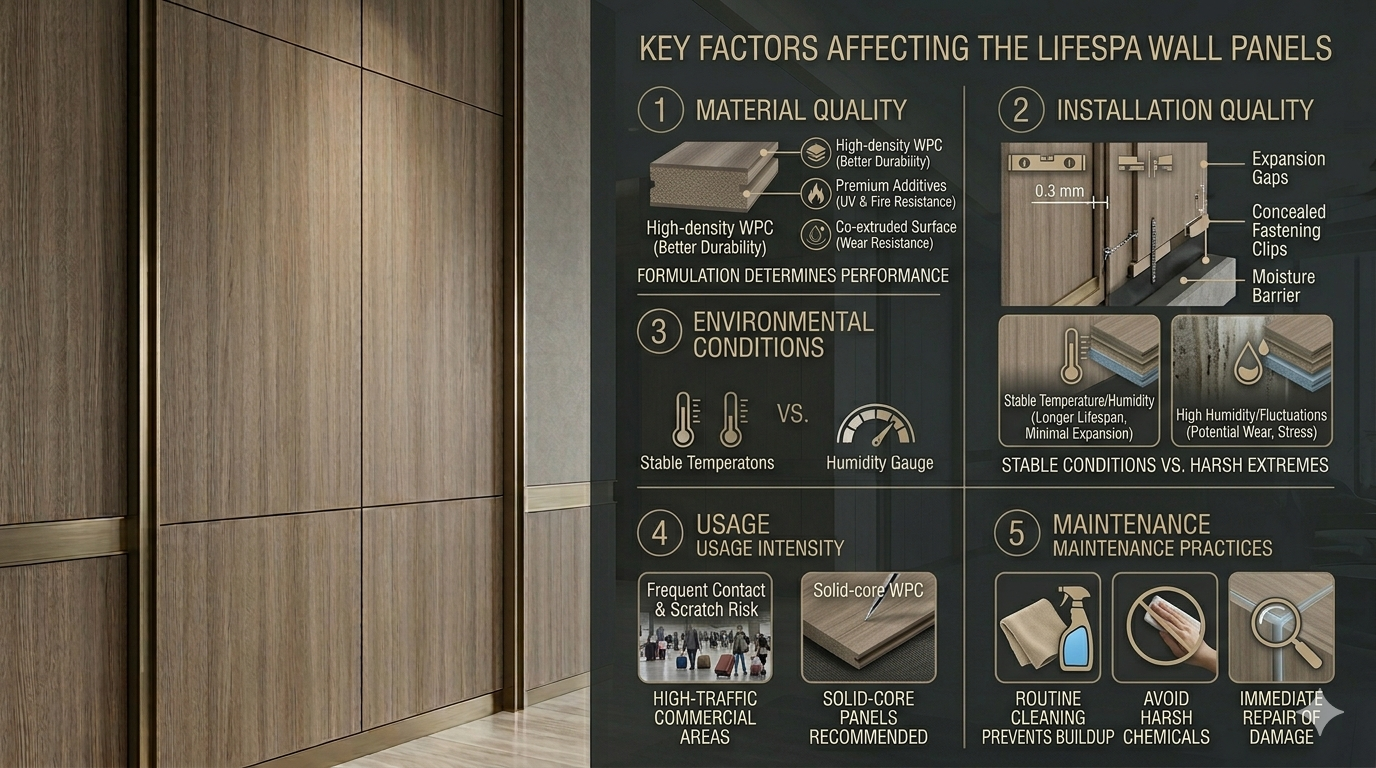
Key Factors Affecting the Lifespan of WPC Wall Panels
1. Material Quality
Not all WPC panels are created equal. The formulation plays a critical role:
- High-density WPC offers better durability
- Premium additives improve UV and fire resistance
- Co-extruded surfaces enhance wear resistance
Low-quality panels may degrade significantly faster.
2. Installation Quality
Improper installation can reduce lifespan dramatically.
Critical Installation Factors:
- Correct substructure alignment
- Adequate expansion gaps
- Proper fastening systems
- Moisture barrier implementation
Poor installation can lead to warping, detachment, or structural failure.
3. Environmental Conditions
Indoor Conditions:
- Stable temperature → longer lifespan
- Controlled humidity → minimal expansion
Harsh Conditions:
- High humidity → potential surface wear
- Temperature fluctuations → expansion/contraction stress
4. Usage Intensity
High-traffic commercial areas experience:
- Frequent physical contact
- Higher risk of scratches and impacts
- Faster surface wear
Solid-core WPC panels are recommended in such scenarios.
5. Maintenance Practices
Although WPC panels are low maintenance, proper care extends lifespan:
- Regular cleaning prevents buildup
- Avoid harsh chemicals
- Immediate repair of damage
Performance Characteristics Over Time
Structural Integrity
WPC panels maintain their structure due to:
- Resistance to cracking and splitting
- Stable composite matrix
- Low thermal expansion
Color Retention
High-quality WPC panels:
- Resist fading with UV stabilizers
- Maintain consistent appearance
- Perform better with co-extrusion technology
Moisture Resistance
Unlike wood:
- No swelling or rotting
- No mold growth (under normal conditions)
- Ideal for humid environments
Lifespan Comparison: WPC vs Other Materials
| Material | Average Lifespan | Maintenance Level | Key Weakness |
|---|---|---|---|
| Solid Wood | 8–15 years | High | Rot, termites |
| PVC Panels | 5–10 years | Low | Brittleness, aging |
| Gypsum Board | 10–20 years | Medium | Moisture damage |
| Metal Panels | 20–30 years | Medium | Corrosion, cost |
| WPC Panels | 10–25 years | Very Low | Quality variation |
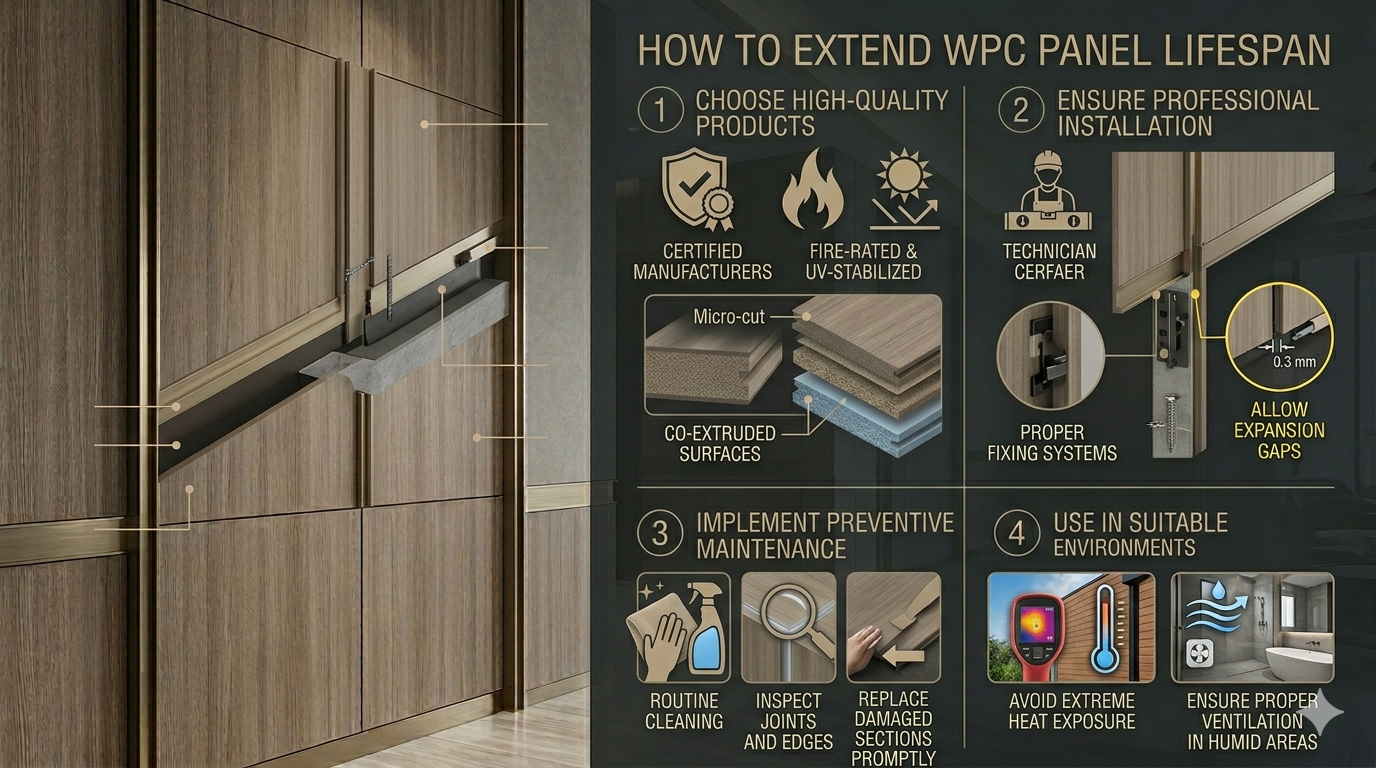
How to Extend the Lifespan of WPC Wall Panels
1. Choose High-Quality Products
- Certified manufacturers
- Fire-rated and UV-stabilized panels
- Co-extruded surfaces
2. Ensure Professional Installation
- Follow manufacturer guidelines
- Use proper fixing systems
- Allow expansion gaps
3. Implement Preventive Maintenance
- Routine cleaning
- Inspect joints and edges
- Replace damaged sections promptly
4. Use in Suitable Environments
- Avoid extreme heat exposure
- Ensure proper ventilation in humid areas
Signs of Aging in WPC Wall Panels
Even durable materials show signs of aging over time.
Common Indicators:
- Surface fading
- Minor scratches or wear
- Slight deformation (in extreme conditions)
- Loosening of joints
These issues are usually cosmetic and do not immediately affect structural performance.
Cost vs Lifespan: ROI Analysis
Initial Investment vs Long-Term Value
WPC panels offer:
- Moderate upfront cost
- Minimal maintenance expenses
- Long service life
Lifecycle Cost Advantage
Over 20 years, WPC panels often outperform traditional materials due to:
- Reduced repair frequency
- No repainting or sealing
- Lower labor costs
ROI Comparison Example
| Material | 20-Year Total Cost | Replacement Frequency |
|---|---|---|
| Wood | High | 2–3 times |
| PVC | Medium | 2–4 times |
| WPC | Low | 1 time or none |
Indoor vs Outdoor Lifespan Differences
Although this article focuses on interiors, understanding the distinction is important.
Indoor WPC Panels
- Protected from UV and weather
- Longer lifespan
- Minimal degradation
Outdoor WPC Panels
- Exposed to UV, rain, temperature changes
- Shorter lifespan (10–20 years)
- Requires higher-grade materials
Conclusion
The lifespan of WPC wall panels is one of their strongest advantages, making them a preferred material in modern interior design and construction. With a typical lifespan of 10–25 years—and even longer under optimal conditions—WPC panels offer a powerful combination of durability, low maintenance, and cost efficiency.
For professionals seeking reliable, long-term interior solutions, WPC wall panels represent a strategic investment that balances performance, aesthetics, and sustainability. By selecting high-quality materials and ensuring proper installation, stakeholders can maximize both lifespan and return on investment.
WPC vs SPC Wall Panels : What’s the Difference?
Compare WPC vs SPC wall panels by materials, structure, waterproofing, durability, installation, cost, and applications to choose the right panel.
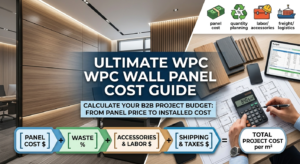
WPC Wall Panel Cost Calculator: Complete Project Cost Guide
Calculate WPC wall panel costs using wall area, panel price, waste, accessories, labor, shipping, and installation expenses.
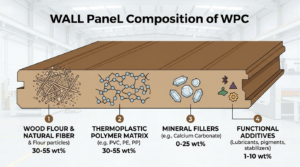
What Is WPC Wall Panel Made Of ? Materials, Composition & Manufacturing
Learn what WPC wall panels are made of, including wood fiber, plastic polymers, additives, material composition, and the complete manufacturing process.