
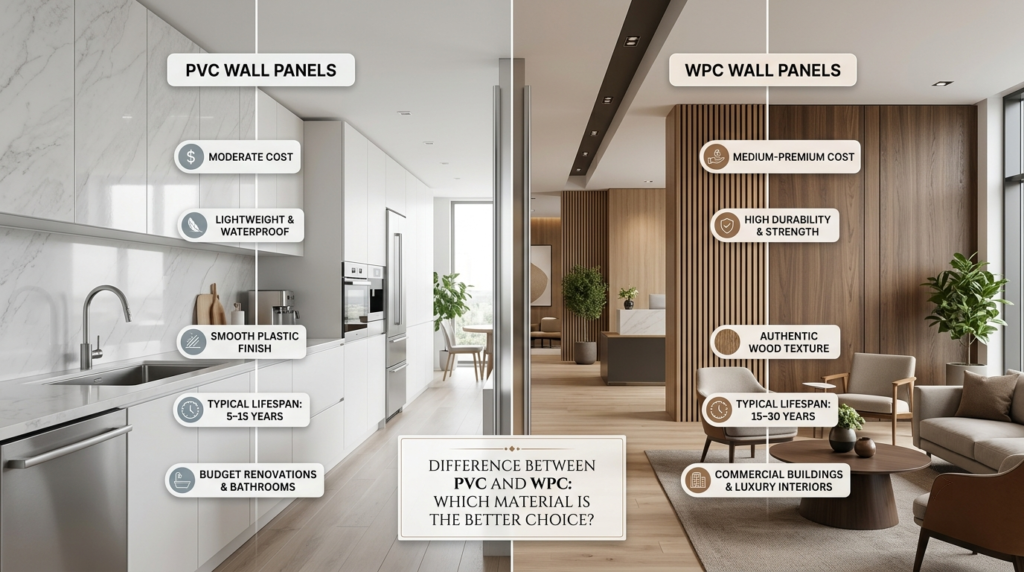
Difference Between PVC and WPC: Which Material Is the Better Choice?
When selecting interior wall materials, one of the most common questions asked by architects, contractors, distributors, and homeowners is the difference between PVC and WPC. Both materials are widely used in residential and commercial interiors because they are lightweight, easy to install, and more affordable than many traditional wall finishes.
However, although PVC (Polyvinyl Chloride) and WPC (Wood Plastic Composite) may appear similar at first glance, they differ significantly in composition, structural strength, durability, appearance, environmental performance, and long-term value.
Choosing the wrong material can lead to higher maintenance costs, reduced service life, or an interior finish that does not meet project requirements. Whether you are designing a luxury hotel lobby, fitting out office spaces, renovating a retail store, or building residential interiors, understanding these differences is essential.
This comprehensive guide compares PVC and WPC across every major performance category, helping buyers make informed purchasing decisions while explaining which material performs better in different applications.
What Is PVC?
PVC (Polyvinyl Chloride) is a synthetic plastic polymer widely used in the construction industry.
PVC wall panels are manufactured primarily from:
- Polyvinyl chloride resin
- Plasticizers
- Stabilizers
- Pigments
- Processing additives
PVC panels are known for being:
- Lightweight
- Waterproof
- Easy to clean
- Economical
- Simple to install
They are commonly used in bathrooms, kitchens, ceilings, temporary buildings, and low-cost interior decoration.
What Is WPC?
WPC stands for Wood Plastic Composite, an engineered material that combines the beauty of natural wood with the durability of polymers.
A typical WPC wall panel consists of:
- Wood fiber or wood flour
- PVC, PE, or PP resin
- Coupling agents
- UV stabilizers
- Fire retardants
- Color pigments
The addition of wood fibers gives WPC a more natural appearance while significantly improving rigidity and impact resistance compared to traditional PVC panels.
Today, WPC has become one of the fastest-growing interior decorative materials for commercial buildings, hotels, offices, restaurants, hospitals, and premium residential projects.
PVC vs WPC: Quick Comparison
| Feature | PVC Wall Panels | WPC Wall Panels |
|---|---|---|
| Main Material | Polyvinyl Chloride | Wood Fiber + Plastic Composite |
| Appearance | Smooth plastic finish | Natural wood texture |
| Strength | Moderate | High |
| Weight | Very light | Medium |
| Waterproof | Excellent | Excellent |
| Moisture Resistance | Excellent | Excellent |
| Fire Resistance | Available with additives | Available with additives |
| Impact Resistance | Moderate | Excellent |
| Maintenance | Very Low | Very Low |
| Expected Lifespan | 5–15 years | 15–30 years |
| Sustainability | Moderate | High |
| Cost | Lower | Medium |
| Premium Appearance | Fair | Excellent |
Material Composition: The Biggest Difference
The most fundamental difference between PVC and WPC lies in their composition.
PVC
PVC panels are almost entirely made from plastic.
Advantages include:
- Uniform material
- Lightweight construction
- High water resistance
Disadvantages include:
- Lower rigidity
- Plastic appearance
- Reduced impact resistance
WPC
WPC combines plastic with wood fibers.
Benefits include:
- More natural aesthetics
- Greater structural stability
- Better mechanical properties
- Higher dimensional stability
Because of this hybrid composition, WPC behaves more like engineered wood while retaining the moisture resistance of plastic.
Appearance and Design Flexibility
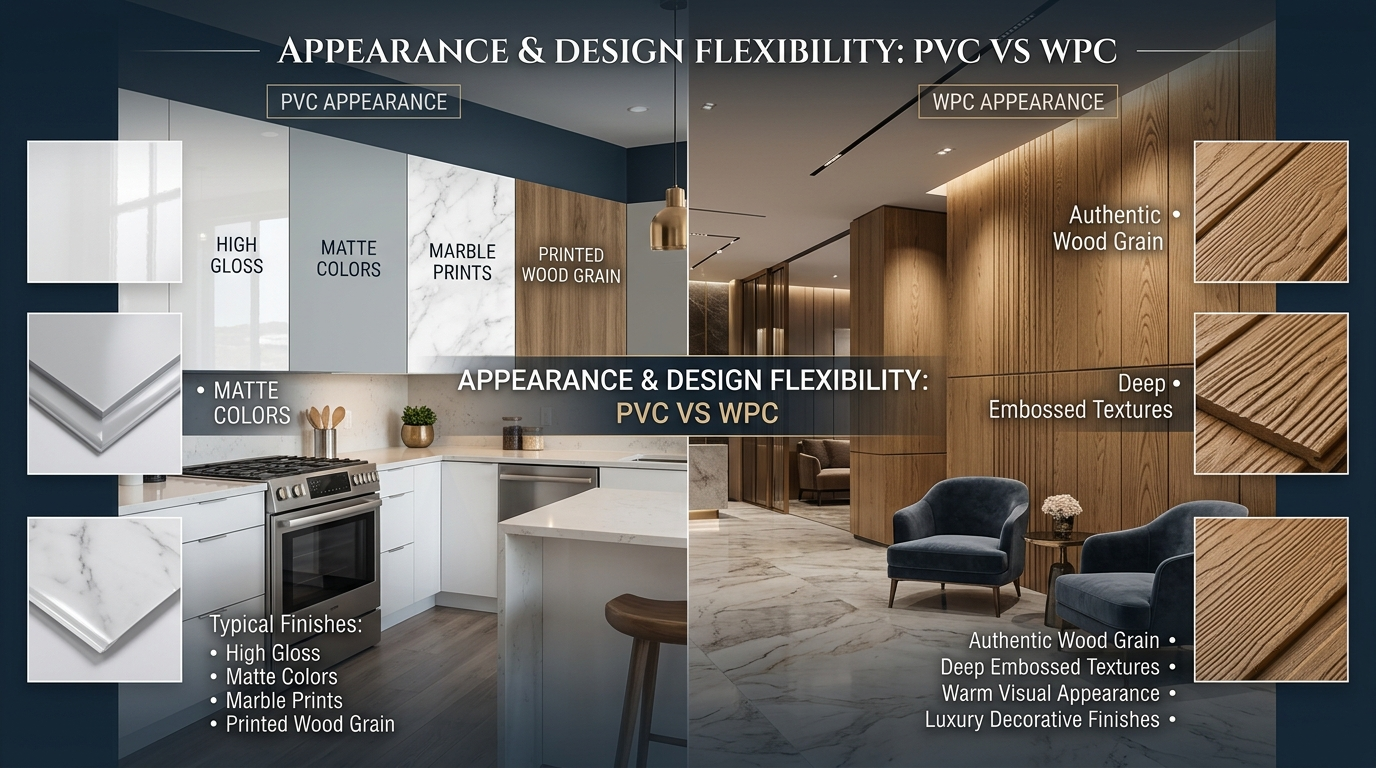
Interior designers increasingly favor WPC because it offers a premium architectural appearance.
PVC Appearance
Typical finishes include:
- High gloss
- Matte colors
- Marble prints
- Printed wood grain
Although modern printing technology has improved PVC aesthetics, close inspection often reveals its plastic nature.
WPC Appearance
WPC panels provide:
- Authentic wood grain
- Deep embossed textures
- Warm visual appearance
- Luxury decorative finishes
Many high-end hotels and offices choose WPC because it delivers the look of real timber without the maintenance issues.
Durability Comparison
Durability is often the deciding factor for commercial projects.
PVC
PVC performs well under normal residential use but may suffer from:
- Surface scratches
- Cracking under heavy impact
- Denting
- Brittleness after years of use
WPC
WPC offers superior durability because of its composite structure.
Benefits include:
- Higher impact resistance
- Better dimensional stability
- Reduced cracking
- Excellent structural strength
This makes WPC ideal for high-traffic commercial environments.
Waterproof and Moisture Resistance
Both materials are considered waterproof.
However, their long-term performance differs.
| Performance | PVC | WPC |
|---|---|---|
| Waterproof | Excellent | Excellent |
| Swelling | None | Very Low |
| Rot Resistance | Excellent | Excellent |
| Mold Resistance | Excellent | Excellent |
Both are suitable for kitchens and bathrooms, but high-quality WPC generally performs better under long-term humidity due to its enhanced structural stability.
Installation Comparison
PVC Panels
Advantages:
- Extremely lightweight
- Easy to cut
- Fast installation
- Lower labor costs
WPC Panels
Advantages:
- Stronger connection systems
- Better panel rigidity
- Hidden clip installation
- Premium finish
Although WPC is slightly heavier, installation remains straightforward for professional contractors.
Maintenance Requirements
Both materials require minimal maintenance.
PVC
Routine care includes:
- Wiping with a damp cloth
- Mild detergent
- No painting required
WPC
Maintenance includes:
- Regular dust removal
- Mild soap cleaning
- Occasional inspection of joints
Neither material requires sealing, staining, or polishing.
Lifespan Comparison
One of the largest differences between PVC and WPC is service life.
| Material | Typical Lifespan |
|---|---|
| PVC Wall Panels | 5–15 Years |
| WPC Wall Panels | 15–30 Years |
The higher durability of WPC translates into lower lifecycle costs despite a higher initial purchase price.
Applications: Which Material Fits Best?
Best Uses for PVC Wall Panels
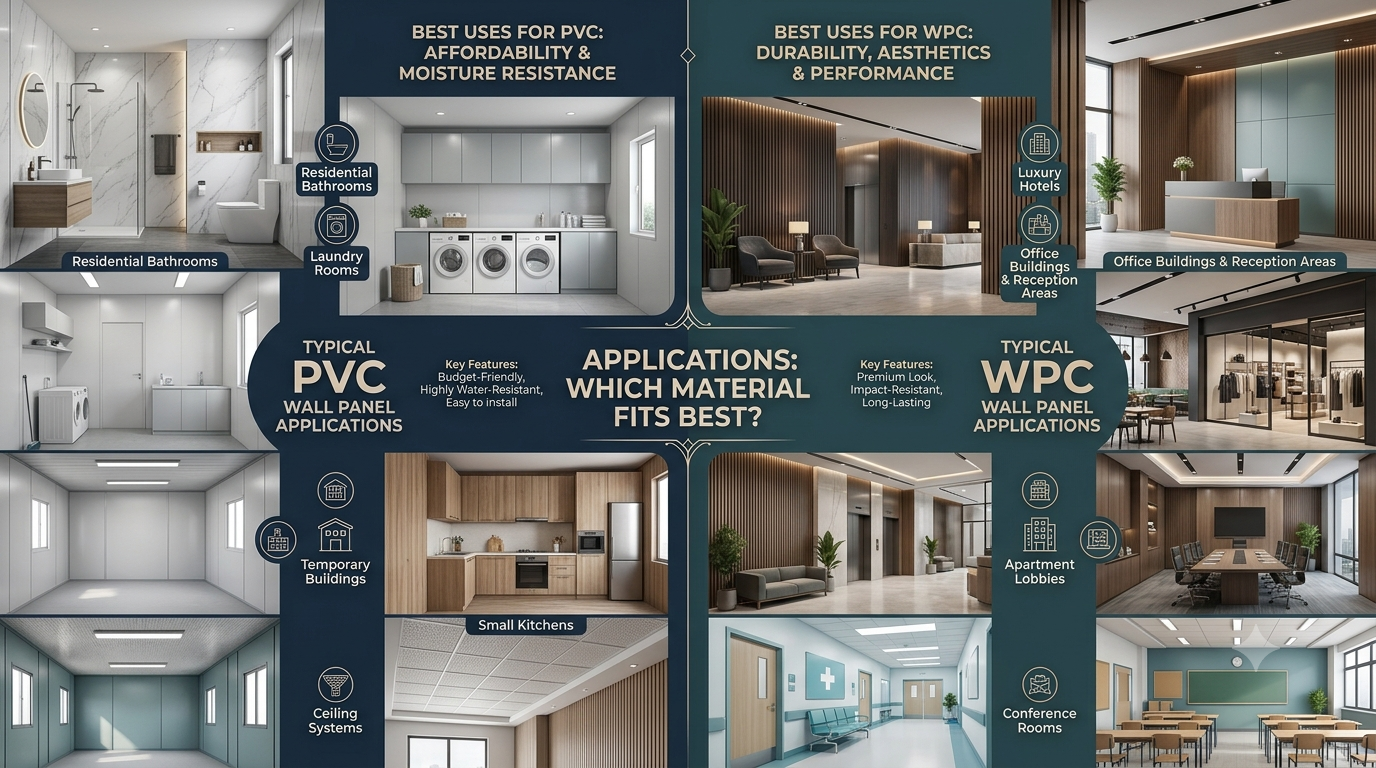
PVC panels remain an excellent choice for projects where affordability and moisture resistance are the top priorities.
Typical applications include:
- Residential bathrooms
- Laundry rooms
- Utility rooms
- Temporary buildings
- Budget renovations
- Ceiling systems
- Small kitchens
Best Uses for WPC Wall Panels
WPC is preferred when durability, aesthetics, and long-term performance are more important than the lowest initial cost.
Common applications include:
- Luxury hotels
- Office buildings
- Restaurants
- Shopping malls
- Hospitals
- Schools
- Reception areas
- Retail stores
- Apartment lobbies
- Conference rooms
Advantages of PVC
- Lower purchase cost
- Lightweight
- Waterproof
- Easy installation
- Easy cleaning
- Suitable for budget projects
Advantages of WPC
- Premium appearance
- Longer lifespan
- Higher impact resistance
- Better structural stability
- More environmentally friendly
- Better acoustic potential
- Higher commercial value
- Excellent return on investment
How to Choose Between PVC and WPC
Consider the following questions before making a decision:
Choose PVC if you need:
- The lowest upfront cost
- Lightweight ceiling panels
- Decorative wall coverings for low-traffic areas
- Fast installation on a tight budget
Choose WPC if you need:
- Premium architectural finishes
- Long-term durability
- Better resistance to impact
- Natural wood aesthetics
- Commercial-grade performance
- Sustainable building materials
- Lower lifecycle costs
Frequently Asked Questions (FAQs)
1. What is the main difference between PVC and WPC wall panels?
The primary difference lies in their composition and performance. PVC wall panels are made almost entirely from plastic, making them lightweight and economical. WPC wall panels combine wood fibers with plastic polymers, creating a stronger, more rigid material with a natural wood appearance. As a result, WPC generally offers better durability, impact resistance, and long-term value, while PVC remains a practical option for lower-budget interior projects.
2. Which is more durable, PVC or WPC?
WPC wall panels are significantly more durable than PVC panels. The wood-plastic composite structure provides greater strength, better resistance to scratches and impacts, and improved dimensional stability. While PVC performs well in residential applications, WPC is better suited for commercial environments where walls experience frequent contact, higher traffic, and more demanding operating conditions.
3. Are both PVC and WPC wall panels waterproof?
Yes. Both PVC and WPC wall panels offer excellent waterproof performance and are suitable for moisture-prone areas such as bathrooms, kitchens, and laundry rooms. However, premium WPC panels typically provide greater structural stability over many years of humidity exposure, making them a better long-term solution for demanding commercial or hospitality environments.
4. Which material is more environmentally friendly?
WPC is generally regarded as the more sustainable material because it incorporates recycled wood fibers and often uses recycled plastics in its manufacturing process. Its longer service life also reduces replacement frequency and construction waste. Although PVC can be recycled, it relies more heavily on petroleum-based raw materials and usually has a higher environmental footprint over its entire lifecycle.
5. Is WPC worth the higher price compared with PVC?
In many projects, yes. Although WPC panels typically have a higher initial purchase cost, they often deliver better long-term value through greater durability, reduced maintenance, fewer replacements, and a more premium appearance. For commercial buildings, hotels, offices, and high-end residential projects, the lower lifecycle cost frequently outweighs the higher upfront investment.
6. Which material is better for commercial interiors?
For most commercial interiors, WPC is the preferred choice because it combines durability, attractive aesthetics, and long-term performance. It withstands heavy daily use, offers better impact resistance, and creates a more upscale appearance. PVC is still suitable for utility spaces or budget-sensitive projects, but WPC generally meets the higher performance expectations of commercial environments more effectively.
7. Can PVC and WPC panels be installed using the same methods?
Many installation techniques are similar, including adhesive bonding, mechanical fastening, and clip systems. However, WPC panels are generally heavier and may require stronger support structures or specialized hidden fastening systems depending on the design. Following the manufacturer’s installation guidelines is essential for achieving the expected service life and maintaining warranty coverage.
Conclusion
Understanding the difference between PVC and WPC is essential when selecting wall panel materials for residential or commercial interiors. While PVC offers affordability, lightweight construction, and excellent moisture resistance, WPC provides superior durability, a more authentic wood appearance, enhanced structural stability, and a significantly longer service life.
For budget-conscious projects with modest performance requirements, PVC remains a practical solution. However, for architects, developers, distributors, and building owners seeking premium aesthetics, lower lifecycle costs, and reliable long-term performance, WPC wall panels are the stronger investment.
As demand for sustainable, durable, and visually appealing interior materials continues to grow, WPC is increasingly becoming the preferred choice for modern commercial and high-end residential spaces.
WPC vs SPC Wall Panels : What’s the Difference?
Compare WPC vs SPC wall panels by materials, structure, waterproofing, durability, installation, cost, and applications to choose the right panel.
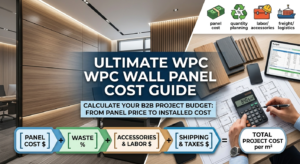
WPC Wall Panel Cost Calculator: Complete Project Cost Guide
Calculate WPC wall panel costs using wall area, panel price, waste, accessories, labor, shipping, and installation expenses.
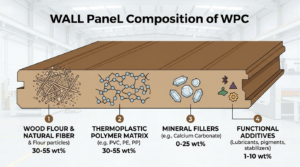
What Is WPC Wall Panel Made Of ? Materials, Composition & Manufacturing
Learn what WPC wall panels are made of, including wood fiber, plastic polymers, additives, material composition, and the complete manufacturing process.