
TAIZHOU LONGQIN
WPC vs Stone Wall Panels
A Comprehensive Technical Comparison for Modern Construction
- April 20, 2026
- 4:47 am
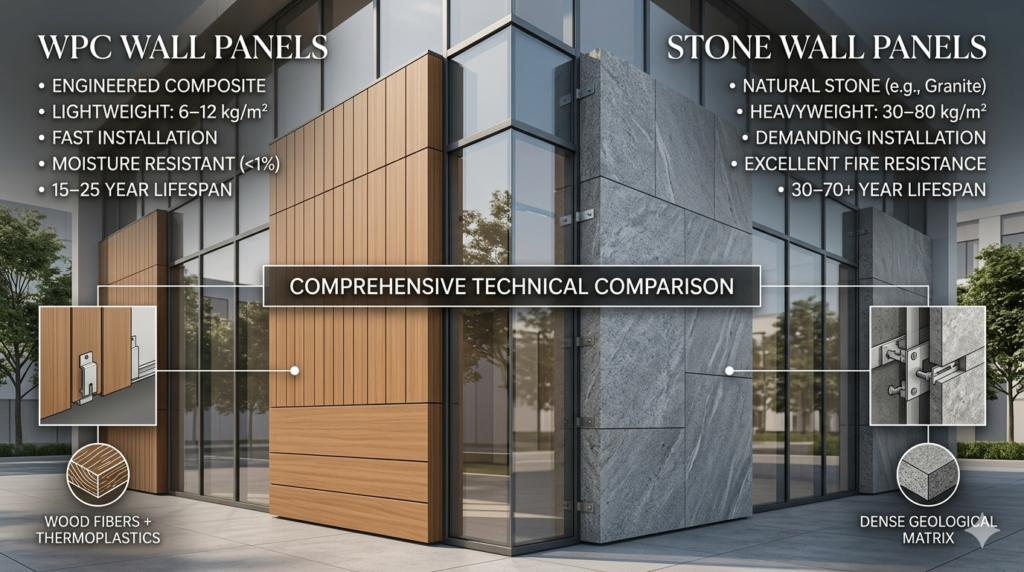
TL;DR
WPC (Wood Plastic Composite) wall panels and stone wall panels differ fundamentally in weight, durability, installation, and cost. WPC panels offer moisture resistance (<1% absorption), lightweight structure, and faster installation with a lifespan of 15–25 years. Stone panels provide superior strength, fire resistance, and longevity (30–70+ years) but require higher structural support and installation cost. The optimal choice depends on project scale, budget, and performance priorities.
What are WPC wall panels?
WPC wall panels are engineered composite materials made from wood fibers (typically 50–70%) combined with thermoplastics such as polyethylene (PE), polypropylene (PP), or PVC. This combination creates a durable, low-maintenance material.
WPC wall panels refer to non-structural cladding systems designed to provide aesthetic appeal and environmental resistance. According to industry data, water absorption is typically below 1%, which ensures dimensional stability in humid environments.
They are widely used in residential, hospitality, and light commercial applications where cost efficiency and ease of installation are key factors.
What are stone wall panels?
Stone wall panels are cladding materials made from natural stone (such as granite, marble, or slate) or engineered stone composites. They are known for their strength, durability, and natural aesthetic.
Stone wall panels refer to heavy-duty cladding systems designed for structural durability and long-term performance. Natural stone has near-zero water absorption in dense varieties like granite and exceptional Resistance to weathering.
These panels are commonly used in high-end residential, commercial, and monumental architecture projects.
How do WPC and stone wall panels differ in material composition?
WPC panels are hybrid materials composed of organic wood fibers embedded in a thermoplastic matrix. This results in a semi-rigid, lightweight material with controlled expansion and moisture resistance.
Stone panels are inorganic materials formed through geological processes or engineered with cementitious binders. They are dense, rigid, and extremely durable under mechanical stress.
The key difference is that WPC is a lightweight composite, while stone is a heavy, naturally occurring material with superior structural strength.
What are the differences in weight and structural load?
Weight Comparison
- WPC Panels:
Typically 6–12 kg/m² - Stone Panels:
Typically 30–80 kg/m² depending on thickness
This means stone panels can be 3–6 times heavier than WPC panels.
Structural Impact
- WPC panels require minimal structural reinforcement
- Stone panels require strong substructures and anchoring systems
This difference significantly affects building design, especially in high-rise projects.
How do they compare in durability and lifespan?
WPC panels typically last 15–25 years in outdoor environments. Their resistance to moisture and insects ensures stable performance, but UV exposure may cause gradual fading.
Stone panels can last 30–70+ years, with some natural stone installations lasting over a century. They resist UV radiation, extreme temperatures, and mechanical wear.
According to industry benchmarks, stone panels provide up to 2–3× longer lifespan than WPC panels in demanding environments.
What about water resistance and weather performance?
Water Absorption
- WPC panels: <1%
- Stone panels: 0.1–2% depending on type
Dense stones like granite have very low absorption, while porous stones like limestone may require sealing.
Weather Resistance
- WPC: Resistant to rain and humidity
- Stone:Resistant to extremes, UV, and temperature
Stone panels generally outperform WPC in harsh climates, including deserts and coastal environments.
Comparison Table: WPC vs Stone Wall Panels
| Feature | WPC Wall Panel | Stone Wall Panel |
|---|---|---|
| Material Type | Composite (wood + plastic) | Natural / engineered stone |
| Weight | 6–12 kg/m² | 30–80 kg/m² |
| Lifespan | 15–25 years | 30–70+ years |
| Water Absorption | <1% | 0.1–2% |
| Fire Resistance | Moderate | Excellent (non-combustible) |
| Strength | Medium | Very high |
| Installation Speed | Fast | Slow |
| Maintenance | Low | Medium |
| Cost | Lower | Higher |
How do WPC and stone panels compare in installation?
WPC Installation
- Lightweight and easy to handle
- Clip or screw-based systems
- Installation time reduced by 30–50%
Stone Installation
- Requires skilled labor
- Mechanical anchoring or mortar systems
- Longer installation time and higher cost
Improper stone installation can increase project cost by 20–40% due to labor complexity.
Which material performs better in thermal and acoustic insulation?
WPC panels provide better thermal insulation due to their composite structure. Thermal conductivity is typically 0.2–0.3 W/m·K, which helps reduce heat transfer.
Stone panels have higher thermal conductivity, typically 1.5–3.5 W/m·K, making them less effective as insulators.
In acoustic performance:
- WPC reduces noise by 20–30%
- Stone reflects sound and may require additional acoustic treatment
What are the aesthetic differences?
WPC panels are manufactured to replicate wood textures and colors with high consistency. They offer uniform appearance across large surfaces.
Stone panels provide natural variation, unique textures, and premium visual appeal. Each piece is distinct, which enhances architectural character.
Design Summary
- WPC → Consistent, modern, customizable
- Stone → Natural, premium, unique
What are the cost differences?
Cost Breakdown
WPC Panels
- Lower material cost
- Lower installation cost
- Lower structural requirements
Stone Panels
- Higher material cost (2–5× WPC in many markets)
- Higher labor cost
- Higher structural reinforcement cost
Lifecycle Cost Insight
While stone has higher upfront cost, its longer lifespan may balance total cost over 40–60 years.
What are the advantages and limitations?
WPC Wall Panels
Advantages:
- Lightweight (6–12 kg/m²)
- Moisture-resistant (<1%)
- Fast installation
- Low maintenance
Limitations:
- Lower fire resistance
- Limited structural strength
- UV fading over time
Stone Wall Panels
Advantages:
- Extremely durable (30–70+ years)
- Non-combustible
- Resistant to extreme weather
- Premium natural appearance
Limitations:
- Heavy weight
- High installation cost
- Requires structural support
What are the best use cases for each material?
WPC Panel Applications
- Residential exterior cladding
- Interior decorative walls
- Hotels and retail spaces
- Renovation projects
Stone Panel Applications
- Luxury residential facades
- Commercial buildings
- Public infrastructure
- Monumental architecture
According to market trends, WPC usage is growing at 10–15% annually, while stone remains dominant in premium construction segments.
What factors should influence your decision?
Decision Framework
- Budget
- Limited → WPC
- Premium → Stone
- Building Structure
- Lightweight → WPC
- Heavy-duty → Stone
- Design Goals
- Uniform → WPC
- Natural variation → Stone
- Lifespan Requirements
- 20 years → WPC
- 50+ years → Stone
Expert Insight: Performance vs practicality in facade design
Modern construction increasingly balances performance with practicality. WPC panels offer efficiency, speed, and cost control, making them ideal for large-scale developments.
Stone panels deliver unmatched durability and prestige but come with higher structural and financial demands.
In many projects, hybrid systems are used—stone for focal areas and WPC for large surfaces—reducing cost while maintaining visual impact. This strategy can reduce facade costs by 15–25%.
Start Your WPC Wall Panel Project Today
Looking for a reliable supplier for bulk orders or project supply?
Our team is ready to provide:
- Free Samples
- Competitive Pricing
- Professional Technical Support
- Fast Quotation within 24 Hours
Request a Quote
Learn More From
Frequently Asked Questions
The main difference lies in material composition and performance. WPC panels are lightweight composite materials designed for moisture resistance and ease of installation, while stone panels are heavy, natural materials offering superior strength, durability, and longevity. This makes WPC suitable for cost-efficient and lightweight applications, while stone is preferred for high-end, long-lasting architectural projects.
Yes, WPC panels are generally more cost-effective due to lower material, installation, and structural costs. Stone panels can cost 2–5 times more depending on the type and complexity of installation. However, stone’s longer lifespan may offset its higher initial cost over several decades, making it a viable option for long-term investments.
Stone panels are better for exterior cladding in high-end or extreme environments due to their durability and weather resistance. WPC panels are suitable for residential and mid-range projects where cost and ease of installation are priorities. The final choice depends on budget, structural capacity, and design requirements.
WPC panels require less maintenance because they do not need sealing, polishing, or regular treatment. Stone panels may require periodic sealing and cleaning to maintain appearance and prevent staining. Over time, WPC panels offer lower maintenance costs, especially in large-scale applications.
WPC panels can replace stone panels in applications where weight, cost, and installation speed are critical factors. However, they cannot fully replicate the structural strength and longevity of stone. In many projects, WPC is used as a practical alternative rather than a direct replacement, especially in residential and commercial developments.
WPC vs SPC Wall Panels : What’s the Difference?
Compare WPC vs SPC wall panels by materials, structure, waterproofing, durability, installation, cost, and applications to choose the right panel.
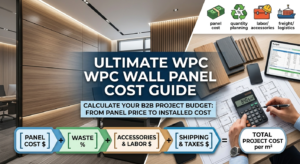
WPC Wall Panel Cost Calculator: Complete Project Cost Guide
Calculate WPC wall panel costs using wall area, panel price, waste, accessories, labor, shipping, and installation expenses.
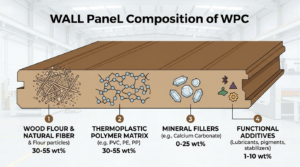
What Is WPC Wall Panel Made Of ? Materials, Composition & Manufacturing
Learn what WPC wall panels are made of, including wood fiber, plastic polymers, additives, material composition, and the complete manufacturing process.