
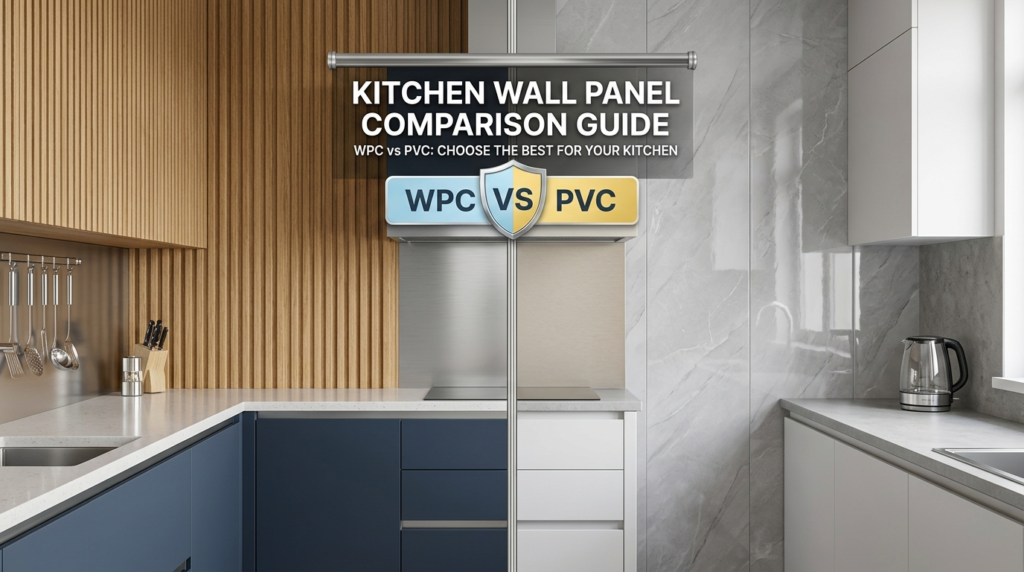
WPC or PVC Wall Panel Which Is Better for Kitchen?
The kitchen is one of the most demanding areas in any residential or commercial interior. Unlike ordinary rooms, kitchen walls are continuously exposed to:
- Water vapor
- Humidity
- Cooking oil
- Heat fluctuations
- Food stains
- Frequent cleaning
- Chemical cleaning products
Because of these conditions, choosing the right wall panel material is essential for long-term performance.
Two popular options in modern kitchen decoration are:
- WPC wall panels (Wood Plastic Composite)
- PVC wall panels (Polyvinyl Chloride)
Both materials offer waterproof performance, easy installation, and low maintenance. However, they differ significantly in structural strength, appearance, lifespan, heat resistance, and overall value.
So, WPC or PVC wall panel which is better for kitchen?
The answer depends on your project requirements. PVC is usually the budget-friendly option, while WPC provides better durability, aesthetics, and long-term performance.
This guide provides a detailed technical comparison to help homeowners, contractors, designers, and kitchen manufacturers make the right choice.
1. What Are WPC Kitchen Wall Panels?
WPC (Wood Plastic Composite) wall panels are engineered decorative panels manufactured by combining wood fibers with polymer materials.
Typical composition:
| Material Component | Percentage Range |
|---|---|
| Wood fiber / wood flour | 30–60% |
| Plastic polymer | 30–60% |
| Functional additives | 5–15% |
Common additives include:
- UV stabilizers
- Fire retardants
- Coupling agents
- Anti-mold additives
- Color pigments
The combination creates a material that provides:
- Wood-like appearance
- Moisture resistance
- Better rigidity
- Improved impact resistance
WPC panels are increasingly used in:
- Modern kitchens
- Luxury apartments
- Hotels
- Restaurants
- Commercial kitchens
2. What Are PVC Kitchen Wall Panels?
PVC (Polyvinyl Chloride) wall panels are lightweight decorative panels made mainly from plastic resin.
Typical composition:
| Material Component | Percentage Range |
|---|---|
| PVC resin | 60–80% |
| Plasticizers | 5–20% |
| Stabilizers | 2–10% |
| Pigments and additives | 5–15% |
PVC panels are popular because they provide:
- Low purchase cost
- Waterproof performance
- Easy installation
- Simple cleaning
They are commonly used for:
- Kitchen backsplashes
- Budget renovations
- Rental properties
- Utility areas
3. WPC vs PVC Kitchen Wall Panels: Technical Comparison
| Performance Parameter | WPC Wall Panel | PVC Wall Panel |
|---|---|---|
| Main Material | Wood fiber + polymer composite | Polyvinyl chloride plastic |
| Density | 0.65–1.30 g/cm³ | 0.45–0.80 g/cm³ |
| Typical Thickness | 5–30 mm | 5–12 mm |
| Expected Lifespan | 15–30 years | 5–15 years |
| Water Absorption (24h) | 0.5–3% | 0.1–1% |
| Surface Hardness | 2–4H pencil hardness | 1–2H pencil hardness |
| Impact Strength | 5–15 kJ/m² | 2–8 kJ/m² |
| Temperature Resistance | -20℃ to 60℃ | -10℃ to 50℃ |
| Cleaning Frequency | Every 12–24 months | Every 6–12 months |
| Replacement Cycle | 15–30 years | 5–15 years |
Actual values vary depending on manufacturer, formulation, and product quality.
4. Waterproof Performance: Which Is Better for Kitchen Moisture?
Water resistance is one of the most important factors for kitchen wall materials.
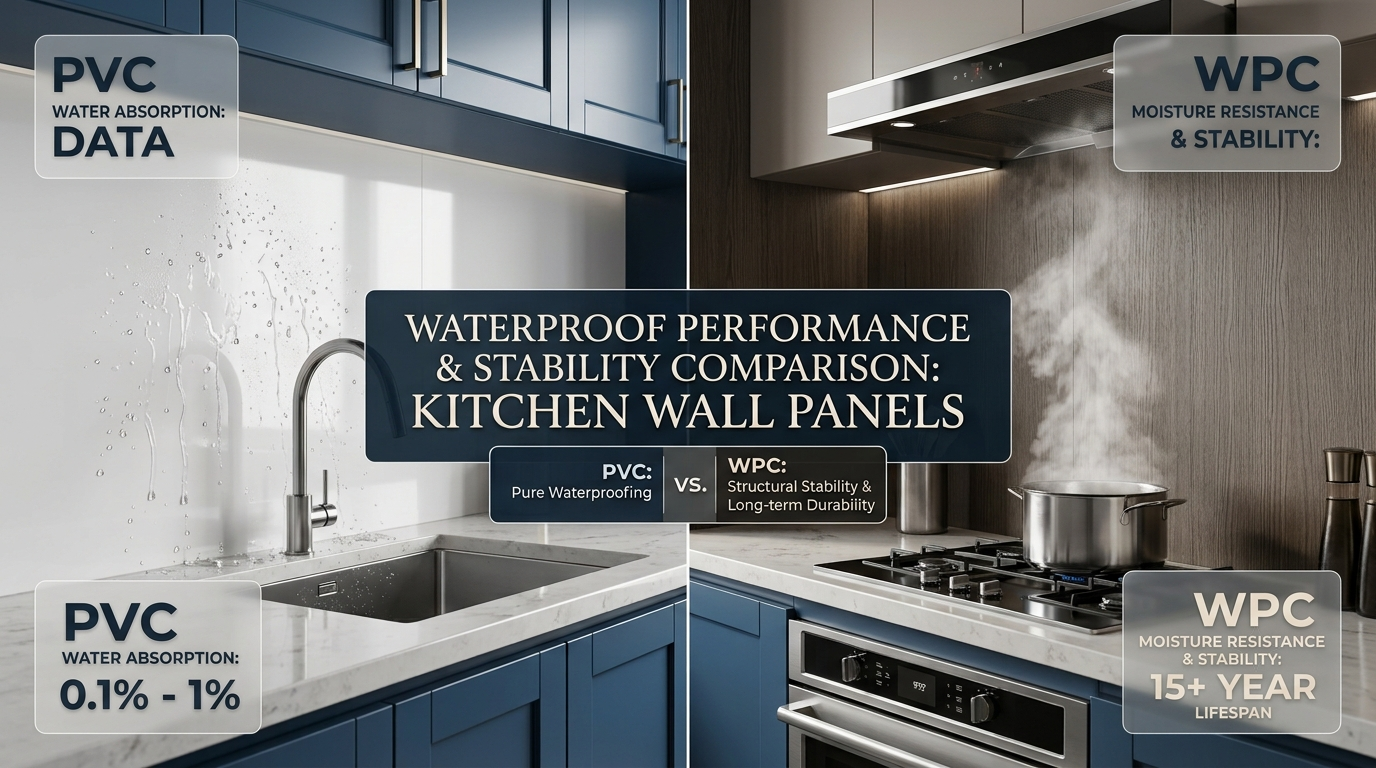
PVC Wall Panels
PVC has excellent waterproof characteristics because it is a fully synthetic plastic material.
Advantages:
- Water absorption: approximately 0.1–1%
- No swelling from water exposure
- Resistant to daily kitchen humidity
PVC performs well in:
- Sink areas
- Kitchen backsplash areas
- Low-moisture kitchens
WPC Wall Panels
WPC also provides excellent moisture resistance.
Advantages:
- Water absorption: approximately 0.5–3%
- Resistant to mold growth
- Better structural stability than ordinary wood
Unlike natural wood, WPC does not:
- Rot
- Crack easily
- Warp significantly
Waterproof Winner
For pure waterproof performance:
PVC slightly exceeds WPC.
However:
For long-term kitchen wall stability:
WPC provides better overall performance because of its stronger structure.
5. Heat Resistance Comparison in Kitchen Environments
Kitchen walls are exposed to:
- Cooking heat
- Steam
- Temperature changes
PVC Performance
PVC typically withstands:
-10℃ to 50℃
Potential limitations:
- Softening at high temperatures
- Surface deformation near heat sources
PVC should not be installed directly behind:
- Gas stove burners
- High-temperature cooking equipment
WPC Performance
WPC typically withstands:
-20℃ to 60℃
Advantages:
- Better dimensional stability
- Lower deformation risk
- More rigid structure
However, direct exposure to open flames should always be avoided.
Heat Resistance Winner:
WPC performs better than PVC for kitchen environments.
6. Durability Comparison
Kitchen walls experience:
- Cleaning friction
- Accidental impact
- Object contact
Surface Hardness Comparison
| Material | Surface Hardness |
|---|---|
| PVC | 1–2H |
| WPC | 2–4H |
| Ceramic Tile | 5–7H |
Higher hardness generally means better scratch resistance.
WPC has an advantage because wood fibers reinforce the polymer structure.
7. Lifespan Comparison
The expected lifespan is one of the biggest differences.
| Material | Kitchen Application Lifespan |
|---|---|
| PVC Wall Panel | 5–15 years |
| WPC Wall Panel | 15–30 years |
| Ceramic Tile | 20–50 years |
For homeowners planning long-term use, WPC usually provides better lifecycle value.
8. Cleaning and Maintenance Comparison
Kitchen walls require frequent cleaning due to:
- Oil stains
- Food particles
- Steam deposits
PVC Maintenance
Advantages:
- Smooth surface
- Easy wiping
- Low maintenance
Recommended cleaning:
- Mild detergent
- Soft cloth
- Avoid abrasive cleaners
WPC Maintenance
Advantages:
- Stronger surface
- Better resistance to scratches
- Premium finishes hide minor marks
Recommended cleaning:
- Regular dust removal
- Mild soap solution
- Avoid aggressive chemicals
9. Appearance Comparison
Kitchen design trends have changed significantly.
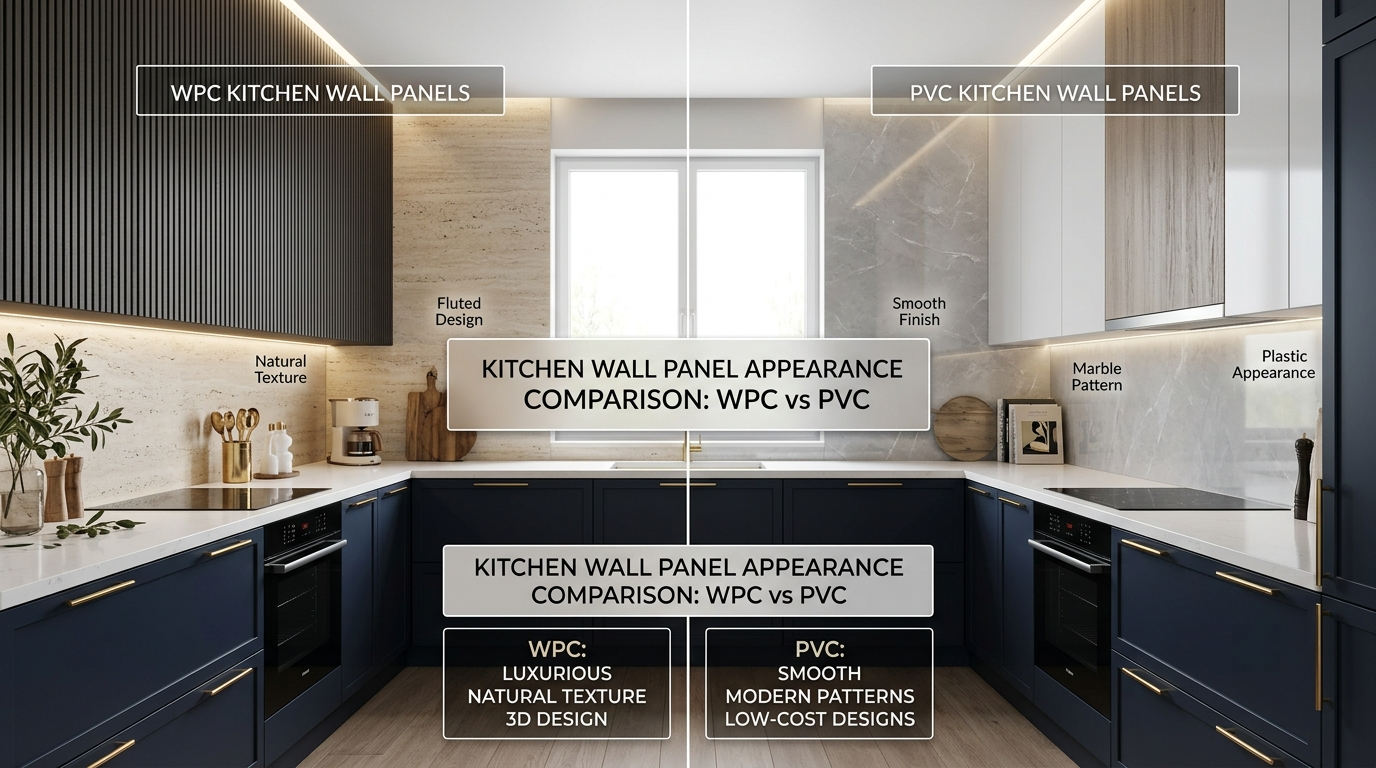
Modern kitchens increasingly prefer:
- Natural textures
- Minimalist designs
- Premium finishes
PVC Kitchen Wall Panels
Common finishes:
- Marble patterns
- Solid colors
- Printed wood grain
Advantages:
- Many low-cost designs
Limitations:
- Plastic appearance
- Less realistic texture
WPC Kitchen Wall Panels
Common finishes:
- Natural wood grain
- Stone texture
- Fluted designs
- 3D embossed surfaces
Advantages:
- More luxurious appearance
- Better match with modern cabinets
10. Comparison Summary: WPC vs PVC for Kitchen
| Category | Winner | Reason |
|---|---|---|
| Lowest Cost | PVC | Lower material price |
| Waterproof Performance | PVC | Lower water absorption |
| Lifespan | WPC | 15–30 years |
| Heat Resistance | WPC | Higher temperature tolerance |
| Impact Resistance | WPC | Higher strength |
| Natural Appearance | WPC | Wood-like texture |
| Easy Installation | PVC | Lightweight |
| Long-Term ROI | WPC | Fewer replacements |
Frequently Asked Questions (FAQ)
1. WPC or PVC wall panel which is better for kitchen?
For most modern kitchens, WPC wall panels are the better overall choice because they provide a longer lifespan, stronger structure, better heat resistance, and a more premium appearance. PVC panels are still a practical option for budget projects because they are cheaper and highly waterproof. The final choice depends on whether the priority is low initial cost or long-term performance and design quality.
2. Are WPC wall panels waterproof enough for kitchen use?
Yes, WPC wall panels are suitable for kitchen environments because they have low water absorption, typically around 0.5–3% after 24 hours depending on product quality. They resist moisture, mold, and humidity better than natural wood. However, WPC panels should not be exposed directly to continuous water immersion or installed immediately beside open flames.
3. Can PVC wall panels be used behind a kitchen stove?
PVC wall panels should not be installed directly behind high-temperature cooking equipment because PVC has a lower temperature resistance range compared with WPC and other materials. Direct heat from gas burners or open flames may cause deformation. If PVC is used in kitchens, additional heat protection measures should be considered.
4. How long do WPC and PVC kitchen wall panels last?
WPC kitchen wall panels typically last 15–30 years under proper installation and normal indoor conditions. PVC wall panels generally last 5–15 years depending on product quality and usage conditions. Although PVC has a lower initial cost, WPC often provides better long-term value because it requires fewer replacements.
5. Is WPC more expensive than PVC kitchen wall panels?
Yes, WPC wall panels usually cost more initially than PVC panels. PVC typically costs around USD $5–15 per square meter, while WPC commonly ranges from USD $15–40 per square meter. However, WPC offers a longer service life, better durability, and a more premium appearance, which can make it more economical over the entire lifecycle of the kitchen.
6. Are WPC wall panels easier to maintain than kitchen tiles?
WPC wall panels require less maintenance than traditional ceramic tiles because they have fewer joints where dirt and grease can accumulate. Cleaning usually requires only a damp cloth and mild detergent. However, ceramic tiles may still provide higher heat resistance and scratch resistance in areas directly exposed to cooking temperatures.
7. Which kitchen wall panel is better for commercial kitchens?
For commercial kitchens, the choice depends on regulations and usage conditions. WPC may be suitable for restaurant dining areas, decorative walls, and customer-facing spaces. PVC can be used in lower-risk areas. However, professional kitchens with high heat, fire, and hygiene requirements often require specially certified materials designed for industrial conditions.
Conclusion
When comparing WPC or PVC wall panels which is better for kitchen, both materials have advantages.
PVC wall panels are:
- More affordable
- Lightweight
- Highly waterproof
- Easy to install
WPC wall panels provide:
- 15–30 years lifespan
- Better impact resistance
- Higher heat tolerance
- More premium appearance
- Better long-term value
For budget-conscious kitchen renovations, PVC remains a practical solution. However, for modern kitchens, luxury residential projects, hotels, and commercial interiors, WPC wall panels are generally the better choice because they deliver a stronger combination of durability, aesthetics, and lifecycle performance.

WPC Wall Panels Wholesale : Complete B2B Buying Guide for Importers & Distributors
Learn how to source WPC wall panels wholesale. Compare specifications, pricing, MOQ, certifications, suppliers, shipping, and B2B purchasing strategies.
WPC vs. PVC vs. HPL Wall Panels : Complete Material Comparison Guide 2026
Compare WPC, PVC, and HPL wall panels based on material composition, lifespan, density, water resistance, fire performance, maintenance, cost, and commercial applications. Find the best wall panel solution for your project.
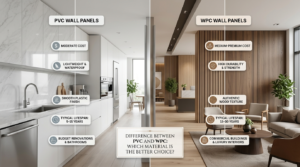
Difference Between PVC and WPC : Which Wall Panel Material Is Better?
Learn the key differences between PVC and WPC wall panels. Compare composition, durability, waterproof performance, fire resistance, installation, maintenance, cost, sustainability, and best applications in this comprehensive guide.